loaction
SNU Professor Yee Kwanjung’s Team Succeeds in High-Altitude Scientific Balloon Flight and Sea Recovery
-
작성자
관리자
-
등록일
2018.07.10
-
조회수
1,035
SNU Professor Yee Kwanjung’s Team Succeeds in
High-Altitude Scientific Balloon Flight and Sea Recovery
High-Altitude Scientific Balloon Flight and Sea Recovery
- First in Korea to Succeed in Flight Test;
Second in World to Complete the Sea Recovery Test
Second in World to Complete the Sea Recovery Test
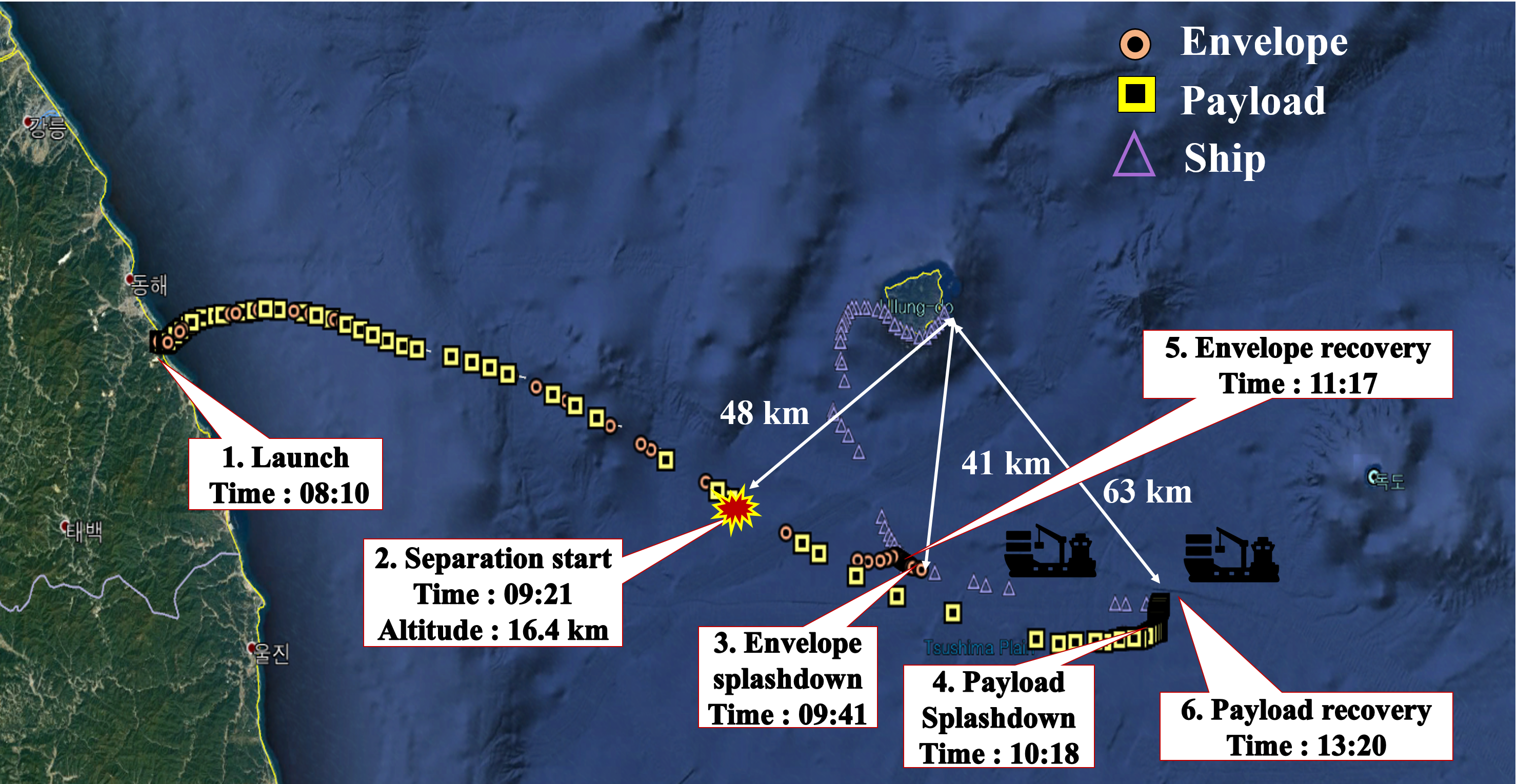
▲ Flight Trajectory of the Scientific Balloon Launched at Samcheok
On 20th, SNU College of Engineering (Dean Cha Kook-Heon) announced that the Aerospace Vehicle Design Laboratory (AVDL, Professor Yee Kwanjung) of the Department of Mechanical and Aerospace Engineering has succeeded in the flight and sea recovery tests of its high-altitude scientific balloon (SNUBALL: Seoul National University BALLoon) that operates at the stratosphere.
On the Korean peninsula of high population density and narrow mountainous areas, even the parachute landing of the payload separated from the envelope after flight mission can still cause accidents by falling onto houses and roads.
Hence the team has chosen sea recovery as an alternative method to safely operate massive scientific balloons with heavy payloads.
The 7m small-scale scientific balloon launched at Samcheok of the Gangwon Province completed its flight mission at 17km flight altitude according to the separation orders of the ground station to land 60km away from launch point on sea south of Ulleungdo 5 hours later where the recovery team collected the envelope and all mission equipment.
Therefore, the AVDL team has become the first in Korea to complete the flight test and second in the world to complete sea recovery after the Japan Aerospace Exploration Agency (JAXA).
SNU Professor Yee Kwanjung states, “We have attained the operation techniques like design and production of scientific balloon, development of TT&C (telemetry, tracking, and commanding) equipment, flight trajectory estimation, balloon launch and recovery for effective space environment tests through this flight test. Our plan is to design a massive scientific balloon with a mass greater than 50kg to analyze its movement in low density environment through drop test.”
Meanwhile, this research has been conducted with the support of the National Research Foundation of Korea.
[Reference]
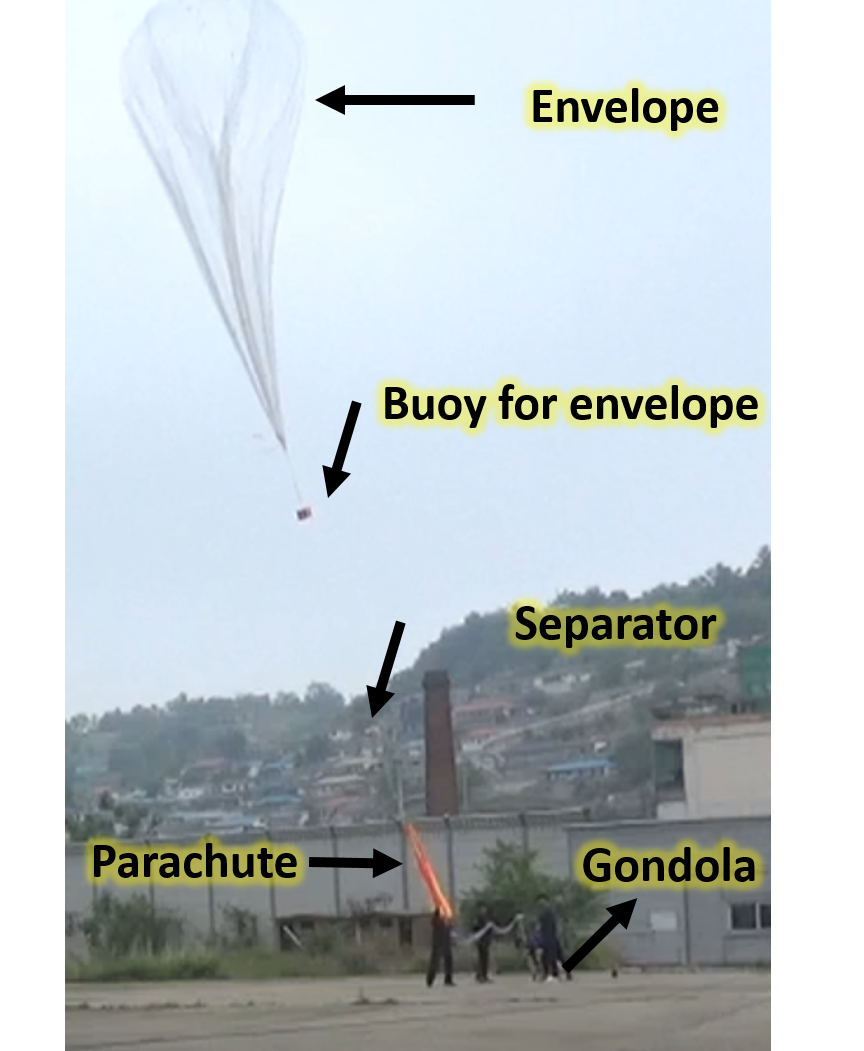
▲ The Launch of the Scientific Balloon
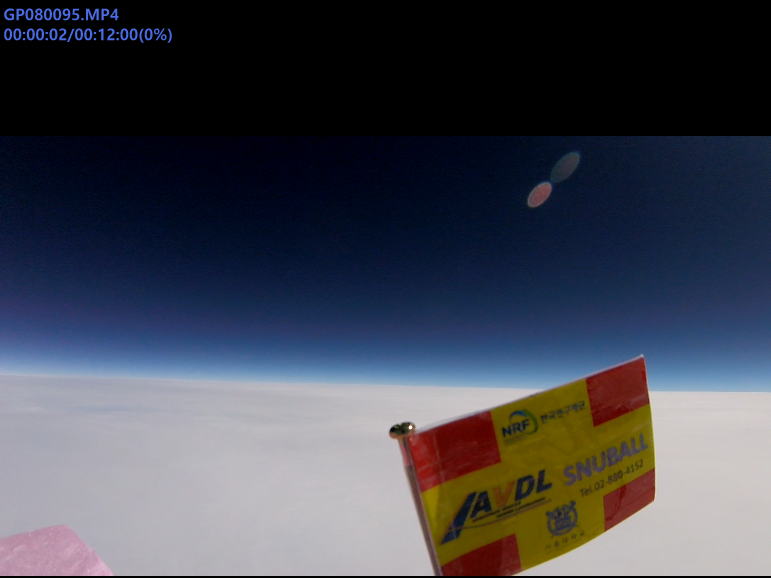
▲ The Scientific Balloon at Flight Altitude of 17km
▲ The Scientific Balloon at Flight Altitude of 17km