loaction
SNU Professor Rhee Shin Hyung et al. Publishes the OpenFOAM Hacking Guide, the First Korean Must-Read for OpenFOAM Users
-
작성자
관리자
-
등록일
2018.11.13
-
조회수
1,350
SNU Professor Rhee Shin Hyung et al. Publishes the OpenFOAM Hacking Guide, the First Korean Must-Read for OpenFOAM Users
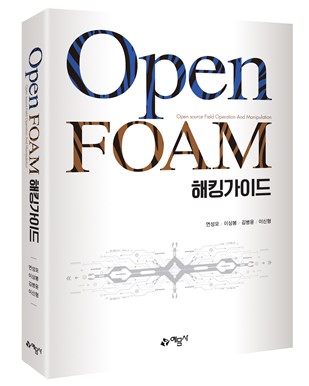
▲ Cover Page of the OpenFOAM Hacking Guide
SNU College of Engineering announces on 7th the publishment of OpenFOAM Hacking Guide written collaboratively by Professor Rhee Shin Hyung of SNU Department of Naval Architecture and Ocean Engineering, Senior Researcher Yeon Seong Mo of the Ship & Ocean Engineering Research Center of Samsung Heavy Industries, Professor Lee Sang Bong of the Department of Naval Architecture and Offshore Engineering of Dong-A University, and CEO Kim Byoung-Yun of NEXTfoam.
The OpenFOAM is a free, open source software released 10 years ago. Although the software has a large user base, the lack of proper guidebooks and manuals has created a high entry barrier for new users.
The OpenFOAM Hacking Guide is a mentor to these new users. From the basic structure of OpenFOAM to coding, the book provides numerous useful information to its readers. As a prelude to the actual studying of OpenFOAM, the book also discusses the background to the open source software movement and the steps to operate OpenFOAM on user’s computer.
The book is targeted to researchers and graduate students who have a basic knowledge and experience on CFD (computational fluid dynamics) and structured programming language like Fortran. Therefore, rather than focusing on the theory of numerical analysis, the book chooses to center on the operation principles and components of OpenFOAM framework.
Part 1 of the book provides a brief explanation on open source programs and OpenFOAM. Part 2 guides the installation procedure of OpenFOAM and adds an explanation on the installation and operation of OpenFOAM in HPC (High-performance computing) environment.
Part 3 introduces the RTS and objectRegistry structures, which also cover the object specification and reference during class management and runtime. Part 4 begins the actual coding with OpenFOAM.
Part 5 consists of tutorials on tackling various problems with OpenFOAM solvers and Part 6 recommends a few add-on projects and their installation procedures that can serve as supplements to the OpenFOAM.
Professor Rhee explains, “We aimed to garner all the know-hows of specialists to answer all the questions that OpenFOAM developers may have. Using this book, we intend to share and study the tips to using OpenFOAM with our readers.”