loaction
SNU Research Team Led by Professor Moo Young Han Won the Innovation Award at the 1st World Summit on Leaving No One Behind
-
작성자
관리자
-
등록일
2019.03.20
-
조회수
1,179
SNU Research Team Led by Professor Moo Young Han Won the Innovation Award at the 1st World Summit on Leaving No One Behind
- Developed Environment-Friendly Toilets Implementing a Korean Waste-as-Fertilizer Idea
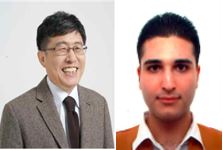
▲ Professor Moo Young Han of Department of Civil and Environmental Engineering (LEFT), Researcher Shervin Hashemi (RIGHT)
▲ Professor Moo Young Han of Department of Civil and Environmental Engineering (LEFT), Researcher Shervin Hashemi (RIGHT)
SNU College of Engineering (Dean Kook-Heon Char) announced on 28th that research team led by Professor Moo Young Han of the Department of Civil and Environmental Engineering, which includes researcher Shervin Hashemi, received the Innovation Award at the 1st World Summit on Leaving No One Behind hosted by WaterLex and WIPO in Geneva, Switzerland on February 7th.
The team was highly praised at the summit for suggesting the tori (土利) toilet project that changes waste to fertilizer without water. Tori, which means to “benefit the soil,” is an environment-friendly toilet invented by implementing IT and technology to the Korean traditional toilet “Hae Woo So.”
Conventional water toilets are criticized as one of the causes of water shortage and pollution for using large amount of tap water to discharge. Hence, the team developed an eco-friendly circulatory toilet disposing the Western thought that human wastes are “waste” and introducing the Korean idea that body wastes are fertilizers for the soil.
The tori toilet up-cycles body waste to transform it into resource. It turns urine into liquid fertilizer and feces into composts to save fertilizer cost and increase the production of high-quality agricultural products. It is also economical as the toilet reduces the use of tap water.
The team first separated the paths that urine and feces pass through by manipulating the structure of toilet. Then they created separate storages to store wastes to be produced into liquid fertilizer and composts. Next, they installed solar cell panels and wind power systems to self-generate and supply the toilet with energy needed for maintenance. Lastly, they added a rainwater system on the washbasin to make good use of water resource.
Currently, the tori toilets are installed at Noeul Park in Mapo-gu and small gardens in Nowon-gu in preparation for commercialization. This pilot scale tori installation is used for the team to survey people’s awareness, evaluate amenity and safety, test fertilizer quality, etc.
The research findings can stretch beyond agriculture to be applied to areas that lacks tap water supply. The plan is to install these low-cost, high-efficiency toilets in developing countries. Also, the toilets will be installed in Vietnam as a solution for issues relating to toilets.
Professor Han stated, “The tori toilet with the Korean philosophy embedded received high praise. This eco-friendly circulatory toilet can help to solve sewage problems and food shortages.”
Meanwhile, Professor Han’s team also opened the Water and Sanitation Appropriate Technology Center (WASAT) in Vietnam with the support of the National Research Foundation of Korea. Their plan is to promote projects to develop toilet-related and rainwater-for-drinking technologies; thus, satisfying the visions of the current government to expand international science and technology exchange.
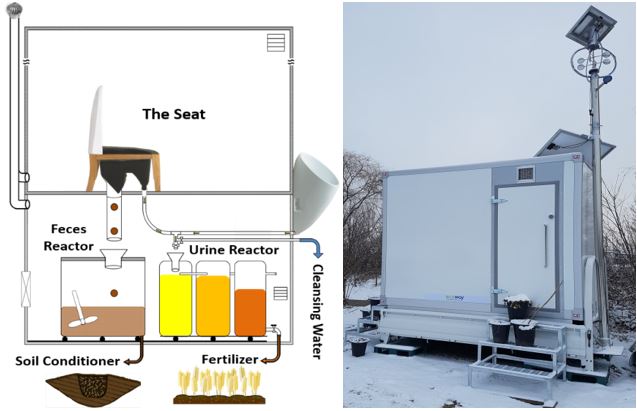
▲ (From Left to Right) Diagram of the Environment-Friendly “Toiri” Toilet / A Pilot Scale “Tori” at Noeul Park, Mapo-gu, Seoul

▲ Professor Han’s Team (Researcher Shervin Hashemi) Received Innovation Award at the 1st World Summit on Leaving No One Behind