loaction
SNU College of Engineering Professor Jung Won Park, Publishes 'Science' that Directly Monitors Nuclear Generation at the Atomic Level
-
작성자
관리자
-
등록일
2021.03.02
-
조회수
979
SNU College of Engineering Professor Jung Won Park, Publishes 'Science' that Directly Monitors Nuclear Generation at the Atomic Level
- Seoul National University research team identifies the fundamental principles on which solid materials are formed … Published in Science -

(Description of pictures, From left Professor Jung Won Park of the Department Chemical and Biological Engineering, Students Sungsu Kang, Sungin Kim, Ji Soo Kim, Minho Kang)
Professor Jung Won Park of the Seoul National University Department of Chemical and Biological Engineering succeeded in being the first in the world to directly observe nuclear process at the atomic level. Its results, being that of a basic science study that solved the century-long challenge on nuclear production, was published in Science (IF 41.845), the world's most prestigious international journal, at 4 a.m. on January 29 (Korean time),
The process of nuclear generation in which atoms gather and form crystals for the first time is such an important scientific phenomenon that the theory has been studied since the late 1800s. However, the size of the atom is several Angstroms (Å․ 10 billionth of a meter) and it is difficult to observe the nuclear process directly with conventional technology because it moves rapidly in milliseconds (a thousandths of a single second). Several theories have emerged describing the mechanism of nuclear generation, but there have been limitations in proving it through experiments.
The researchers designed experiments to observe the nuclear generation process in real time at the atomic level. First of all, nanomaterials that emit gold atoms when electron beams are received on a thin graphene membrane with a thickness of one atom were synthesized. Next, the synthesized specimen was observed with the world's highest performing transmittance electron microscope (TEM) owned by the Lawrence Berkeley National Laboratory (LBNL) and observed the formation of gold crystals in real time.
Gold atoms released after receiving electron beams from transmission electron microscopes are clustered on graphic thin films to form nanocrystals. Observations have confirmed that until a stable crystalline nucleus is born, atoms reversibly repeat the two states of disordered clump structure (non-crystalline) and regularly arranged crystal structure (crystalline). Further, as the size of the crystalline nucleus grows, the reversible response becomes irreversible. This is contrary to the traditional theory of nuclear generation that states that crystal nuclei grow into regularly aligned crystals from the beginning.
"In the early stage of nuclear production where only a few atoms are clumped, the two states of crystalline and non- crystalline phases are repeated because the energy needed to go back and forth between the two states is small," explained Professor Jung Won Park
Furthermore, the researchers also confirmed that the greater the chance of the crystalline nucleus staying crystalline due to its growth, and that the longer the crystalline nucleus stays crystalline, the greater the size of the nanocrystals. When the diameter was about 1 nm, it would be of a crystalline state with a 10% chance, but if the diameter was over 2 nm, it existed as a crystalline with a probability of more than 90%. In other words, the crystalline nucleus, which was initially mostly non- crystalline, grows and eventually forms a crystalline state. Further, while the nanocrystals of the dimensions of 2nm2 were only in crystalline form for about half the time, the nuclei of crystalline formations of 4nm2 were in crystalline form for most of the time.
"This is a study that has not just discovered new principles in the process of nuclear production, but has also experimentally verified it. It is of academic significance that we have presented a new thermodynamic theory on nuclear generation," said Professor Jung Won Park
The study was the result of the combined support by government projects such as the Hydrogen Energy Innovation Technology Development Project of the Korea Research Foundation and the research project of the Institute for Basic Science as well as private support from faculties like Samsung Future Technology Promotion Foundation's Samsung Future Technology Promotion Project.
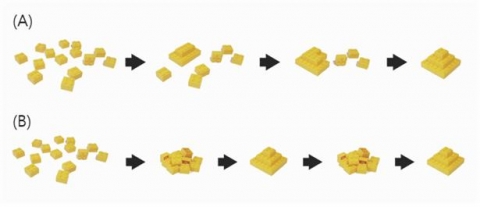
[Figure 1] Traditional nuclear generation theory (A) and the nuclear generation process (B) observed in this study.
The conventional theory of nuclear generation was that when atoms gather and form a crystalline nucleus, they grow in a regularly aligned form from the beginning. However, real-time observations at the atomic level show that the initial crystalline nucleus reverses back and forth between the two states of the clump structure (second from the left of the figure below) and the ordered crystal structure (third from the left of the figure below).

[Picture 2] High-resolution electron microscopy footage of the birth of gold nanocrystals.
The gold atom is a small grain arranged regularly in the red region of the third image (320 ms) from the left. The phenomenon of the regular arrangement of gold atoms appearing and disappearing was visible. This is because the crystalline nuclei grows by reversibly repeating the states of being in a non-crystalline and crystalline state.
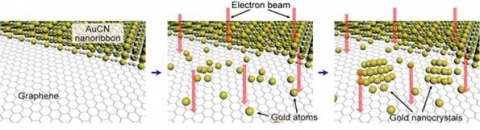
[Picture 3] The birth process of gold nanocrystalline observed through the Transmittance electron microscope (TEM)
First, the researchers synthesized a nanoribbon (AuCN) that reacts with an electron beam on top of graphene to release gold atoms. When filming with a transmittal electron microscope begins, the phenomenon of producing nanocrystals begins when gold atoms gather on graphene. By analyzing these images, you can observe the birth of gold nanocrystals.