loaction
공대뉴스광장
Professor Sung-Hoon Ahn's Team of SNU College of Engineering Develop Light Powered Shape-Memory Alloy Micro Robot
-
작성자
관리자
-
등록일
2020.02.10.
-
조회수
992
Professor Sung-Hoon Ahn's Team of SNU College of Engineering Develop Light Powered Shape-Memory Alloy Micro Robot
- Published In the Front Cover of Advanced Materials Technologies' December Issue
- Published In the Front Cover of Advanced Materials Technologies' December Issue
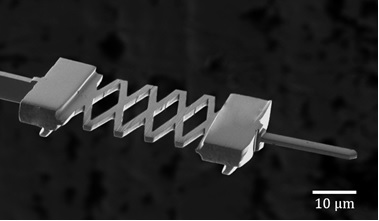
Picture 1. Micro Robot produced from a shape-memory alloy
The robot right before it detaches from its base material.
SNU College of Engineering (Dean Kookheon Char) announced on December 20 that a team led by Professor Sung-Hoon Ahn of the Department of Mechanical Engineering has developed a cell-sized micro robot that moves using light.
The robot developed by Professor Sung-Hoon Ahn 's team (Picture 1) is 65 μm long, 25 μm wide, and 8 μm high, similar in size to somatic cells in humans. The nickel-titanium shape-memory alloy is made by processing it into a concentrated ion beam and consists of a motor that reciprocates in a longitudinal direction, a bridge that comes into contact with the floor and a fine needle.
The robot can perform straight-line movements at speeds of up to 10 μm/s using energy from the laser, and curve movements with a turning radius of at least 5 μm. When a laser is lit onto the robot, its movement is driven by the shape-memory effect and the optothermal trapping effect.
The photothermal trapping effect is a phenomenon in which light energy is absorbed by an object and converted into thermal energy, and forces are generated by temperature changes around the object. In particular, the robot developed by Professor Ahn's team is capable of operating micro-scale objects that are not transparent, unlike the optical tweezer method that won the 2018 Nobel Prize in Physics.
"Unlike conventional micro robot researches, this robot is made only with biocompatible shape-memory alloys," said Dr. Min Soo Kim (SNU Soft Robotics Research Center), the first author of the paper explained the characteristics of the micro robot by adding that, "the laser scanning allows us to control the robot relatively simply."
"There is great meaning to the development of micro-robots that are made short of an electronic circuit, powered by light and made from shape-memory alloys for the first time,” the corresponding author, Professor Sung-Hoon Ahn said. "If in the future, it is possible to find conditions that are environmentally similar to the human body, it would possibly be diversely applicable in the field of biological sciences regarding the treatment of disease or classifying cells," he added.
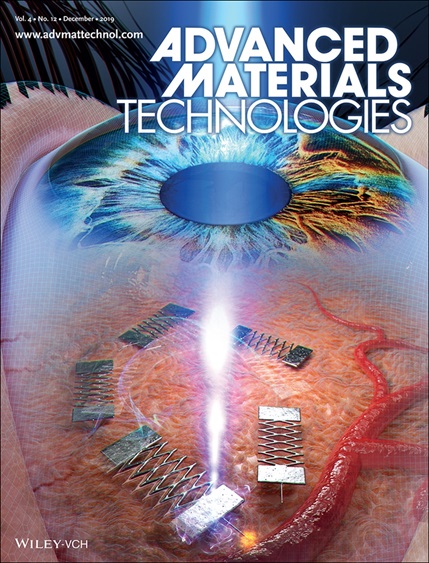
Picture 2. Imagined Potential Applicability of Shape-Memory Alloy Micro Robots
(Cover of the December Issue for Advanced Materials Technologies)
The research was published in the December issue as the front cover of Advanced Materials Technologies, an international scientific journal, and was conducted with support from bodies like the ADD Specialization Center, a Midcareer Researcher supporting business of the National Research Foundation of Korea.
담당부서대외협력실
전화번호880-9148