loaction
공대뉴스광장
The Production Efficiency of Hydrogen Peroxide - the "flower" of the Chemical Industry - Has Increased by 8 Times
-
작성자
관리자
-
등록일
2020.02.10.
-
조회수
1412
The Production Efficiency of
Hydrogen Peroxide - the "flower" of the
Hydrogen Peroxide - the "flower" of the
Chemical Industry - Has Increased by 8 Times
Professor Taeghwan Hyeon of SNU College of Engineering develops a new catalyst to produce hydrogen peroxide only with oxygen and water.
2,000 times cheaper than a precious metal catalyst... High expectations for its potential applicability in the semiconductor cleaning and medical field
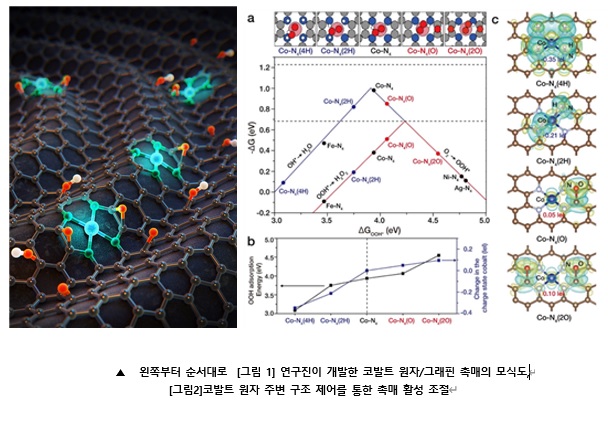
From left [Picture 1] Diagram of Atomic Cobalt/Graphene Catalysts developed by researchers
[Picture 2] Catalyst activity adjustment through control of cobalt atomic peripheral structure
2,000 times cheaper than a precious metal catalyst... High expectations for its potential applicability in the semiconductor cleaning and medical field
From left [Picture 1] Diagram of Atomic Cobalt/Graphene Catalysts developed by researchers
[Picture 2] Catalyst activity adjustment through control of cobalt atomic peripheral structure
A catalyst that can increase production efficiency of hydrogen peroxide (H2O2), a key ingredient in the chemical and pharmaceutical industries, by up to eight times has been developed by local researchers.
SNU College of Engineering (Dean Kookheon Char) announced on July 14 that Taeghwan Hyeon, Endowed-Chair Professor of the Department of Chemical and Biological Engineering (Director of the research team on nanoparticles at the Institute for Basic Science) and Professor Yung Eun Sung (Associate Research Director of the research team on nanoparticles at the Institute for Basic Science) have, along with Professor Jong Suk Yoo of the Department of Chemical Engineering, University of Seoul, co-developed an electric catalyst that can produce hydrogen peroxide in an environmentally friendly manner using only oxygen and water.
"The research allowed for the production of hydrogen peroxide with a catalyst that is 2,000 times cheaper than previous precious metal catalysts," said Professor Taeghwan Hyeon. "This achievement has solved problems regarding price, efficiency and environmental issues related to the production of hydrogen peroxide that increases with the development of ultra-precision semiconductors and mechanical components, killing three birds with one stone."
Hydrogen peroxide is widely used for not only household products such as toothpaste and kitchen detergent but also at medical sites that need sterilization, for waste water treatment, and semiconductor processes that require the removal of impurities. However, the Antraquinone process, which produces hydrogen peroxide for existing industries, not only required expensive palladium catalysts and needed lots of energy, but showed limitations of causing environmental pollution from by-products.
In response to this, the research team developed an inexpensive catalyst that can produce hydrogen peroxide electrically using water and oxygen without having to go through multiple stages of complex processes. The catalyst developed by the researchers is a form of placing cobalt atoms on top of a two-dimensional graphene. Professor Yung Eun Sung explains that, "The stable structure of the cobalt atom placed on top of the graphene was modeled after the structure of an enzyme that produces hydrogen peroxide in the body."
The new catalyst is cheap because it used cheap cobalt atoms instead of precious metals such as platinum and palladium. By putting this atomic cobalt/graphene catalyst in an oxygen-saturated solution and applying electricity, hydrogen peroxide can be produced without the addition of a separate compound.
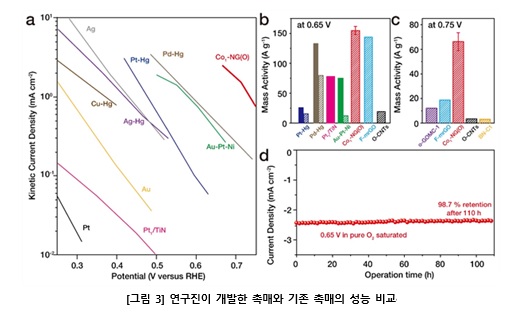
[Picture 3] Comparison of the performance of catalysts developed by researchers
with conventional catalysts
This catalyst also showcases production performance of up to eight times higher than conventional precious metal catalysts. It is capable of producing more than 340 kilograms of hydrogen peroxide per day using a 1 kilogram catalyst. Even after conducting experiments that produce hydrogen peroxide continuously for more than 110 hours, it has been proven to maintain its initial performance of more than 98 percent.
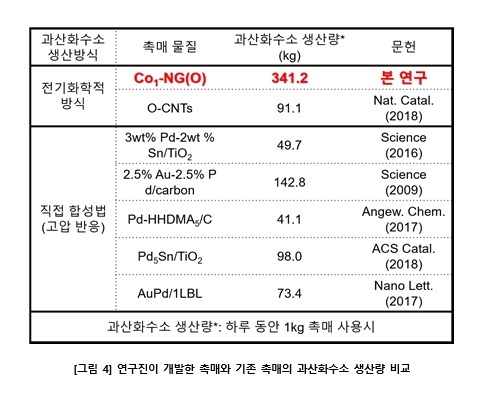
[Picture 4 Comparison of the output levels from catalysts developed
by researchers with conventional catalysts]
Above all, the catalyst developed by the research team is a heterogenous catalyst that is cheaper than a homogenous catalyst and has the advantage of being eco-friendly as it can be re-collected and recycled after the reaction. The study has been regarded highly for being the first in the world to identify a principle that can enhance the activity of a heterogenous catalyst at the atomic level.
"This research has made it possible for the eco-friendly and economically efficient production of hydrogen peroxide that is widely being used as semi-conductor detergents and medical disinfectants," said SNU Professor Taeghwan Hyeon. "As much as this catalyst allows us to synthesize products in a stable and eco-friendly manner at room temperature and pressure, it shows the potential to be widely used in various chemical processes."
The results of the research were published in the January 14 issue of the world renown jouranl Nature Materials (IF 39.124). Meanwhile, SNU Professor Taeghwan Hyeon and Professor Yung Eun Sung University of Seoul who led the research are also respectively the Director and Assistance Research Director of the research team on nanoparticles at the Institute of Basic Science (IBS).
"This research has made it possible for the eco-friendly and economically efficient production of hydrogen peroxide that is widely being used as semi-conductor detergents and medical disinfectants," said SNU Professor Taeghwan Hyeon. "As much as this catalyst allows us to synthesize products in a stable and eco-friendly manner at room temperature and pressure, it shows the potential to be widely used in various chemical processes."
The results of the research were published in the January 14 issue of the world renown jouranl Nature Materials (IF 39.124). Meanwhile, SNU Professor Taeghwan Hyeon and Professor Yung Eun Sung University of Seoul who led the research are also respectively the Director and Assistance Research Director of the research team on nanoparticles at the Institute of Basic Science (IBS).
담당부서대외협력실
전화번호880-9148