loaction
공대뉴스광장
SNU College of Engineering Professor Sung-Hoon Ahn's research team Develops Sensor Measuring Amount of Color Change
-
작성자
관리자
-
등록일
2020.06.22.
-
조회수
1010
SNU College of Engineering Professor Sung-Hoon Ahn's research team Develops Sensor Measuring Amount of Color Change
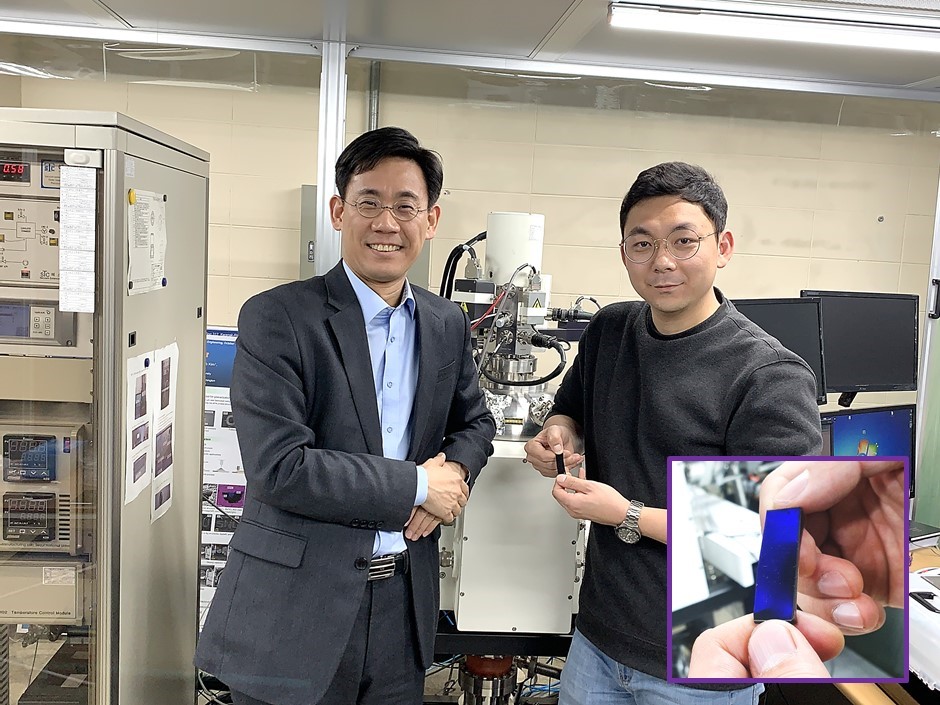
▲ From left, Professor Jaejin Lee (SNU), Dr. Gangwon Jo, Researchers Heehoon Kim and Jeesoo Lee
A research team led by Professor Sung-Hoon Ahn of the Department of Mechanical Engineering at SNU College of Engineering has developed a transformational sensor based on structural color.
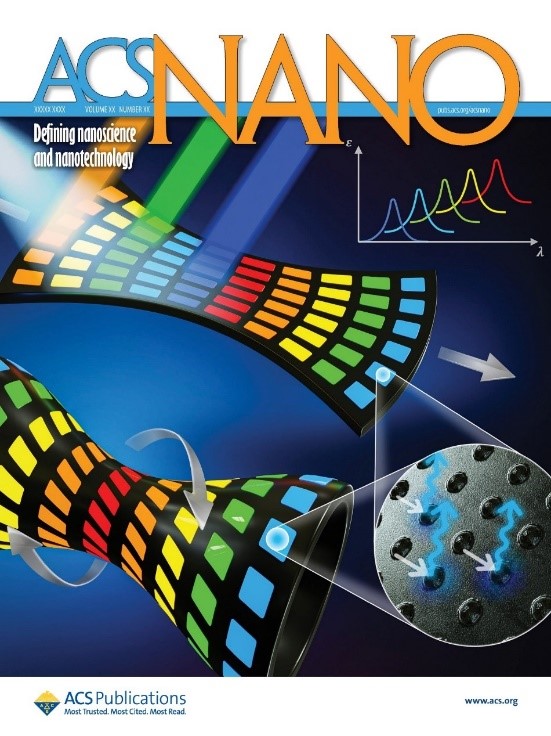
According to SNU, the structural color-based transformational sensor was developed by simulating micro/nano patterns on the feather surface of a butterfly and bird wings. The principles of color expression are divided into traditional methods of using coloring such as pigments and dyes, or the structural color method using micro-nano structures. The structural color causes interference/ scattering on surfaces where white light is employed and patterns of micro/nano size are present, reflecting or absorbing certain wavelengths of light, making them appear as color to our eyes. The structural color sensor that was developed can express the rate of change in color in the form of 'red orange yellow green blue indigo purple' without an electrical circuit and can measure tensile-compression strain of up to 100 percent and shear strain of up to 78 percent.
Conventional strain sensors have a limited range of transformations that can be measured, or it was necessary for them to be measured using an electrical circuit. The research team here has developed a sensor that can see and recognize the strain through color change without using an electric circuit.
Structural color consists of a two-dimensional nano pattern on the surface of the flexible material (PDMS: Polydimethylsiloxane) that has a distance similar to the wavelength of the visible light area and reflects the specific color of the visible light area when the white light is joined at a fixed angle. When the flexible material is modified under force, the reflected color changes as the distance of the surface's nano pattern changes. While previous studies regarding the measuring of strain through structural color only managed to explain the phenomenon itself, this study established a modifier model between wavelengths and deformation rates and enabled it to be applied as an actual strain sensor. In addition, through nano-pattern design with various diffraction phenomena, a structural color based strain sensor was developed for the first time to measure tensile, compressed and shear deformation.
"The developed strain sensor was manufactured as an embedded part through a flexible nanoimprinting process, and is suitable for mass production as it does not require any additional processes while it has the advantage of durability when compared to other nano-patterned structures that have been constructed using multi-material structural ," said Dr. Yeon June Kang, the first author of the research.
Professor Sung-Hoon Ahn, the author of the communication, stated that, "We expect the developed sensor to be used extensively as a sensor for uses such as soft robots or wearable devices with large variations because mechanical deformations can be measured through visual or camera-like changes in color without additional electronic circuits and wires being connected."
The research was conducted with support from the National Research Foundation of Korea's Mid-Sized Researcher Support Project (Strategies) and the Korea-Germany Intelligent Manufacturing System Laboratory (Basic Research Laboratory Support Project) and was selected as the cover paper for the May issue of "ACS Nano", an international journal in the nanotechnology field.
Video: https://www.youtube.com/watch?v=rqNsoWNsymM
Direct link to article: http://www.veritas-a.com/news/articleView.html?idxno=321546
https://www.metroseoul.co.kr/article/20200428500212
http://www.kyosu.net/news/articleView.html?idxno=50646
http://www.newsworks.co.kr/news/articleView.html?idxno=451392
http://dongascience.donga.com/news/view/36342
담당부서대외협력실
전화번호880-9148