loaction
공대뉴스광장
SNU College of Engineering Dean Kookheon Char's Interview with Seoul Economic Daily
-
작성자
관리자
-
등록일
2021.03.09.
-
조회수
1474
SNU College of Engineering Dean Kookheon Char's Interview with Seoul Economic Daily
Drastic changes in universities due to the outbreak of COVID-19...
Large scale investment in China Expanding parts of the high-tech departments
Even with the elimination of the ban on professorship, there are too many internal as well as external regulations in Seoul National University that block innovation attempts Like Stanford University, universities need to create future growth engines.
Large scale investment in China Expanding parts of the high-tech departments
Even with the elimination of the ban on professorship, there are too many internal as well as external regulations in Seoul National University that block innovation attempts Like Stanford University, universities need to create future growth engines.
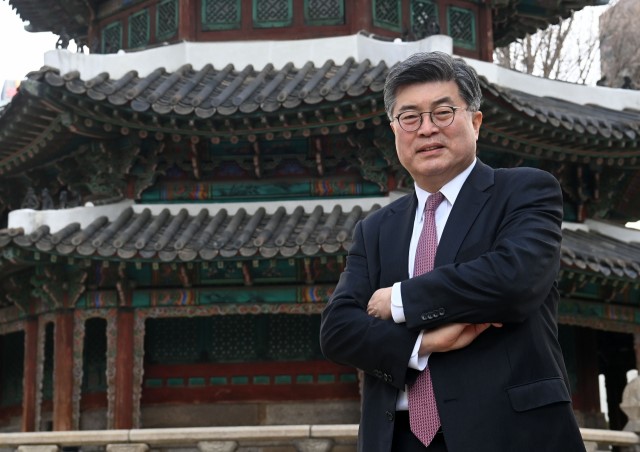
Dean Kookheon Char of Seoul National University's College of Engineering, having had an interview with Seoul Economy Daily at the Hwangudan next to the Westin Josun Hotel in Seoul on February 1, emphasized the transformation of Korean universities.
"If we have an engineering college meeting with six Asian countries, including China, we become highly discouraged. China's investment in Tsinghua University is enormous. We, too, must have a sense of urgency that universities must break the boundaries with companies and actively engage in technology commercialization.”
"It has been 10 years since Seoul National University was incorporated, but there are still many regulatory restrictions" said Dean Kookheon Char (63, photo) of Seoul National University's College of Engineering, in an interview with the Seoul Economic Daily on February 1. "Seoul National University is pushing to expand the number of students in high-tech departments, removing the ban on concurrent professorship, and encouraging the expansion of convergence research between medical and engineering universities, but it is not easy to create an artificial intelligence (AI) valley," he complained. "Like Stanford University in the U.S., universities must work with larger companies, foreign companies, and startups to increase future growth engines and significantly expand their start-up capabilities significantly," he stressed.
- Seoul National University seems to be pushing Seoul Techno Holdings to boost start-ups and expand support for startups.
△ Although Seoul Techno Holdings, Inc. exists, it is under the Research and Development Foundation which is under the direction of the Ministry of Education. It should be made into a semi-independent corporation like Seoul National University Hospital. In the case of Seoul Techno Holdings, Inc., investment in internal and external startups totaled to about 50 billion won, which, despite being the largest among university technology holders, does not even stand a chance. Investment funds for internal and external startups need to be raised by about 1 trillion won. Seoul National University was incorporated in late 2011, and after three and a half years of being the dean of the College of Engineering, I realize that there are still many remnants from it having been a national university. While companies are struggling to survive through means like digital transmission, universities are still far from doing so.
"If we have an engineering college meeting with six Asian countries, including China, we become highly discouraged. China's investment in Tsinghua University is enormous. We, too, must have a sense of urgency that universities must break the boundaries with companies and actively engage in technology commercialization.”
"It has been 10 years since Seoul National University was incorporated, but there are still many regulatory restrictions" said Dean Kookheon Char (63, photo) of Seoul National University's College of Engineering, in an interview with the Seoul Economic Daily on February 1. "Seoul National University is pushing to expand the number of students in high-tech departments, removing the ban on concurrent professorship, and encouraging the expansion of convergence research between medical and engineering universities, but it is not easy to create an artificial intelligence (AI) valley," he complained. "Like Stanford University in the U.S., universities must work with larger companies, foreign companies, and startups to increase future growth engines and significantly expand their start-up capabilities significantly," he stressed.
- Seoul National University seems to be pushing Seoul Techno Holdings to boost start-ups and expand support for startups.
△ Although Seoul Techno Holdings, Inc. exists, it is under the Research and Development Foundation which is under the direction of the Ministry of Education. It should be made into a semi-independent corporation like Seoul National University Hospital. In the case of Seoul Techno Holdings, Inc., investment in internal and external startups totaled to about 50 billion won, which, despite being the largest among university technology holders, does not even stand a chance. Investment funds for internal and external startups need to be raised by about 1 trillion won. Seoul National University was incorporated in late 2011, and after three and a half years of being the dean of the College of Engineering, I realize that there are still many remnants from it having been a national university. While companies are struggling to survive through means like digital transmission, universities are still far from doing so.
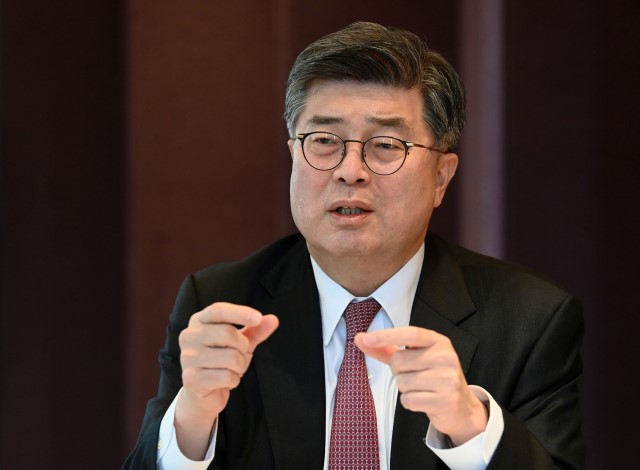
-Even the government changed the law for the establishment of teachers and a win-win structure with universities.
△ Most people hate to become a subsidiary because of the poison pill, which requires professors or anybody else involved to give 20% of their shares to universities if they start a business and become a subsidiary of a university technology holdings company. Fortunately, the law has been revised, and the university's mandatory stake will be lowered to 10% from June. But this is not good enough. Even if it was to be lowered to 5%, it would be judged as being barely sufficient. If it's not made advantageous to become a university subsidiary, everybody will turn a blind eye to it.
- You seem to show great passion for the development of the College of Engineering
△ In the era of the 4th industrial revolution, we have opened a common course related to information and communication technology (ICT) and have attempted to build infrastructure such as cloud and graphic processing unit (GPU) servers. We have also persuaded the government to start recruiting around 40 people in a wide area (non-school) from 2023. In order to revitalize collaborative research, a new concept research institute, Haedong Institute of Advanced Engineering, is being built, which will open at the end of next year. The creation of a Bio Health Fund to strengthen cooperation between engineering and medical schools is also being planned.
-Increasing the number of high-tech departments is also a pending issue.
△ There were many difficulties due to the Ministry of Education's measures to curb the metropolitan area, but they granted permission to select 40 students to enter the university without deciding on a major who were allowed to choose their desired major in six months. The number of students in the Department of Computer Science and Engineering, which was 50, will be increased by 15 and the numbers for Electrical and Computer Engineering and the College of Natural Sciences will each increase by five. Nearly 50 students leave Seoul National University's College of Engineering to enroll in medical school annually. We are attempting to increase the number of high-tech departments by utilizing this capacity. However, students majoring in computer engineering at Seoul National University usually end up going to companies in the Silicon Valley such as Google and Facebook, and are not interested in Samsung Electronics. System semiconductors, AI, and software personnel all go to Silicon Valley. In other words, brain drain is taking place. Although so far, medical and engineering universities have been playing on separate fields, convergence research must be conducted in the wake of the novel corona virus pandemic (COVID-19).
-Haedong Advanced Institute of Engineering will also play a major role in Seoul National University's convergence research as well as the AI Valley creation process.
△ Haedong Institute of Advanced Engineering, which is under construction through the 50 billion won donation made by Jungsik Kim, the late CEO of Daeduck Electronics, should combine basic research, technology companies such as startups, and foreign companies such as Google and Facebook. It will be Seoul National University's first convergence research space that transcends departments and colleges. However, it is still not easy to shorten the cost and duration of the construction due to the outdated National Building Act. In addition to Haedong Institute of Advanced Engineering, the infrastructure of engineering facilities is being significantly expanded through the construction of the large lecture hall of building no. 43 and the reconstruction of building no. 31 and 32. Seoul National University is pushing for AI Valley, and it is planning to expand parts of its research park to Nakseongdae by turning it into AI Valley.
-Professor Hee-Jae Park is in charge of the AI Valley, but there seems to be many difficulties regarding its regulation.
△The College of Engineering is leading the AI Valley to industrialize basic research and platforms in schools. Cooperation between the Seoul Metropolitan Government and the Seoul Metropolitan Office of Education is urgently needed, such as the city freeing green areas. It is necessary to create conditions for leading overseas AI companies such as Google to move in. However, Seoul city seems to have more interest for Yangjae-dong, such as attracting the Yangjae-dong, KAIST AI Graduate School.
-Regarding AI, it seems like the infrastructure must be well established.
△Amazon, Google, and Microsoft are getting discounts on their cloud usage fees, but they are in contact with KT, Naver, Kakao, and Samsung SDS to promote the domestic cloud industry.
△ Most people hate to become a subsidiary because of the poison pill, which requires professors or anybody else involved to give 20% of their shares to universities if they start a business and become a subsidiary of a university technology holdings company. Fortunately, the law has been revised, and the university's mandatory stake will be lowered to 10% from June. But this is not good enough. Even if it was to be lowered to 5%, it would be judged as being barely sufficient. If it's not made advantageous to become a university subsidiary, everybody will turn a blind eye to it.
- You seem to show great passion for the development of the College of Engineering
△ In the era of the 4th industrial revolution, we have opened a common course related to information and communication technology (ICT) and have attempted to build infrastructure such as cloud and graphic processing unit (GPU) servers. We have also persuaded the government to start recruiting around 40 people in a wide area (non-school) from 2023. In order to revitalize collaborative research, a new concept research institute, Haedong Institute of Advanced Engineering, is being built, which will open at the end of next year. The creation of a Bio Health Fund to strengthen cooperation between engineering and medical schools is also being planned.
-Increasing the number of high-tech departments is also a pending issue.
△ There were many difficulties due to the Ministry of Education's measures to curb the metropolitan area, but they granted permission to select 40 students to enter the university without deciding on a major who were allowed to choose their desired major in six months. The number of students in the Department of Computer Science and Engineering, which was 50, will be increased by 15 and the numbers for Electrical and Computer Engineering and the College of Natural Sciences will each increase by five. Nearly 50 students leave Seoul National University's College of Engineering to enroll in medical school annually. We are attempting to increase the number of high-tech departments by utilizing this capacity. However, students majoring in computer engineering at Seoul National University usually end up going to companies in the Silicon Valley such as Google and Facebook, and are not interested in Samsung Electronics. System semiconductors, AI, and software personnel all go to Silicon Valley. In other words, brain drain is taking place. Although so far, medical and engineering universities have been playing on separate fields, convergence research must be conducted in the wake of the novel corona virus pandemic (COVID-19).
-Haedong Advanced Institute of Engineering will also play a major role in Seoul National University's convergence research as well as the AI Valley creation process.
△ Haedong Institute of Advanced Engineering, which is under construction through the 50 billion won donation made by Jungsik Kim, the late CEO of Daeduck Electronics, should combine basic research, technology companies such as startups, and foreign companies such as Google and Facebook. It will be Seoul National University's first convergence research space that transcends departments and colleges. However, it is still not easy to shorten the cost and duration of the construction due to the outdated National Building Act. In addition to Haedong Institute of Advanced Engineering, the infrastructure of engineering facilities is being significantly expanded through the construction of the large lecture hall of building no. 43 and the reconstruction of building no. 31 and 32. Seoul National University is pushing for AI Valley, and it is planning to expand parts of its research park to Nakseongdae by turning it into AI Valley.
-Professor Hee-Jae Park is in charge of the AI Valley, but there seems to be many difficulties regarding its regulation.
△The College of Engineering is leading the AI Valley to industrialize basic research and platforms in schools. Cooperation between the Seoul Metropolitan Government and the Seoul Metropolitan Office of Education is urgently needed, such as the city freeing green areas. It is necessary to create conditions for leading overseas AI companies such as Google to move in. However, Seoul city seems to have more interest for Yangjae-dong, such as attracting the Yangjae-dong, KAIST AI Graduate School.
-Regarding AI, it seems like the infrastructure must be well established.
△Amazon, Google, and Microsoft are getting discounts on their cloud usage fees, but they are in contact with KT, Naver, Kakao, and Samsung SDS to promote the domestic cloud industry.
- In universities, the transfer of technology and start-ups are greatly important. What do you think about this when compared to Stanford University of the U.S.
△ It is incomparable to Stanford University. We are trying to inspire not only the teachers but also the students to start a business, but there are still many obstacles when undertaking new business. Seoul National University being a large organization, finds itself to a have poor autonomy regarding colleges. Seoul National University also recently has several successful start-up cases, including those of Professor Sunghoon Kwon and Professor Jung Hoon Lee but various mentors, venture capitalists and accelerators are currently needed. Technology companies like Silicon Valley should come on and off campus.
-Is it not possible to survive only when universities change?
△ Nowadays, like Minerva school, Ecole42, and Olin College of Engineering, universities are changing innovatively in their form. We only teach skills, like in vocational schools, but we also need to teach leadership and entrepreneurship.
- There is a lot of interest in and outside the university in lifting the ban on double-term positions such as corporate work by professors at Seoul National University.
△ Seoul National University has decided to lift regulations from March so that professors can work in high-tech fields for the first time. One example is the appointing of Dr. Joon-Seok Lee of Google Research as a professor at the Graduate School of Data Science. Until now, if a professor worked as an outside director of a company, the individual could work up to eight hours, but due to the permission of concurrent positions, it is possible for the individual to now work for up to 20 hours. Working hours of more than eight hours will be excluded from college salaries, but professors will receive more from companies. This is the basis for recruiting good manpower in AI and robot fields. Seoul National University President Se-Jung Oh is determined to do so within 2 percent of the teachers. Of course, there are concerns about creating a sense of incompatibility or exploitation, but it should continue to be expanded.
Seoul National University doesn't run an AI graduate school.
△ We are attempting for the second time to get government support for the operation of AI graduate schools. It is one of the issues managed by the AI committee at the headquarters level. The AI Research Institute is spurring convergence research for the development of core AI and applied technologies.
- Convergence research must also be conducted at the Siheung campus that Seoul National University is building.
△ Siheung Campus should be used as a test bed for the future, allowing students to test convergence education and research that couldn't be implemented at the Gwanak Campus. It is necessary for a hospital to be established and a new graduate school that is convergent in its nature should also be operated. The undergraduate course can be studded at the Gwanak Campus. It should properly serve as a test bed for autonomous vehicle tracks or for aviation and drones. Medical schools should be selected separately. Siheung City has provided 660,000m2 of land and 500 billion won, and hopes that the engineering college will compensate for it and that global companies will also begin to enter. Currently, the first stage of construction has been completed and the building will be built three years later, and is planned to develop greatly in 10 years.
- Seoul National University's Pyeongchang campus has many buildings, but it is not being actively utilized.
△ Although Gangwon-do and Pyeongchang state supported the university, tens of billions of w on of the university budget is spent annually without profit-making projects. In order to create a food valley like the University of the Netherlands, it is not only the college of agriculture, but also the fields of polymer compounds and biotechnology that must participate and actively attract residents and global companies to participate, which is a difficult problem.
△ It is incomparable to Stanford University. We are trying to inspire not only the teachers but also the students to start a business, but there are still many obstacles when undertaking new business. Seoul National University being a large organization, finds itself to a have poor autonomy regarding colleges. Seoul National University also recently has several successful start-up cases, including those of Professor Sunghoon Kwon and Professor Jung Hoon Lee but various mentors, venture capitalists and accelerators are currently needed. Technology companies like Silicon Valley should come on and off campus.
-Is it not possible to survive only when universities change?
△ Nowadays, like Minerva school, Ecole42, and Olin College of Engineering, universities are changing innovatively in their form. We only teach skills, like in vocational schools, but we also need to teach leadership and entrepreneurship.
- There is a lot of interest in and outside the university in lifting the ban on double-term positions such as corporate work by professors at Seoul National University.
△ Seoul National University has decided to lift regulations from March so that professors can work in high-tech fields for the first time. One example is the appointing of Dr. Joon-Seok Lee of Google Research as a professor at the Graduate School of Data Science. Until now, if a professor worked as an outside director of a company, the individual could work up to eight hours, but due to the permission of concurrent positions, it is possible for the individual to now work for up to 20 hours. Working hours of more than eight hours will be excluded from college salaries, but professors will receive more from companies. This is the basis for recruiting good manpower in AI and robot fields. Seoul National University President Se-Jung Oh is determined to do so within 2 percent of the teachers. Of course, there are concerns about creating a sense of incompatibility or exploitation, but it should continue to be expanded.
Seoul National University doesn't run an AI graduate school.
△ We are attempting for the second time to get government support for the operation of AI graduate schools. It is one of the issues managed by the AI committee at the headquarters level. The AI Research Institute is spurring convergence research for the development of core AI and applied technologies.
- Convergence research must also be conducted at the Siheung campus that Seoul National University is building.
△ Siheung Campus should be used as a test bed for the future, allowing students to test convergence education and research that couldn't be implemented at the Gwanak Campus. It is necessary for a hospital to be established and a new graduate school that is convergent in its nature should also be operated. The undergraduate course can be studded at the Gwanak Campus. It should properly serve as a test bed for autonomous vehicle tracks or for aviation and drones. Medical schools should be selected separately. Siheung City has provided 660,000m2 of land and 500 billion won, and hopes that the engineering college will compensate for it and that global companies will also begin to enter. Currently, the first stage of construction has been completed and the building will be built three years later, and is planned to develop greatly in 10 years.
- Seoul National University's Pyeongchang campus has many buildings, but it is not being actively utilized.
△ Although Gangwon-do and Pyeongchang state supported the university, tens of billions of w on of the university budget is spent annually without profit-making projects. In order to create a food valley like the University of the Netherlands, it is not only the college of agriculture, but also the fields of polymer compounds and biotechnology that must participate and actively attract residents and global companies to participate, which is a difficult problem.
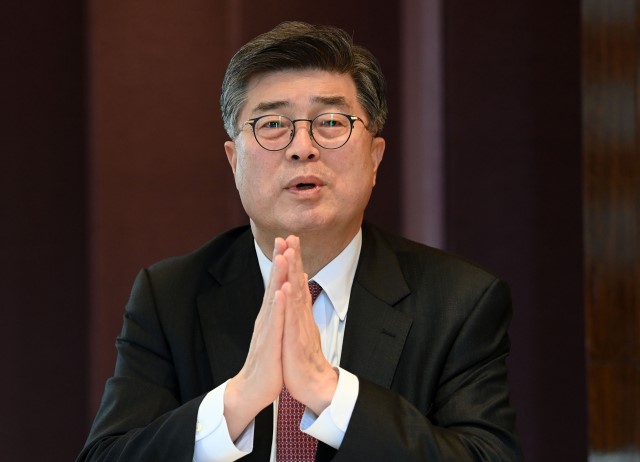
-Universities should have a sense of urgency and as done in China, the government should greatly increase support for universities.
△ Before becoming a professor, I once worked for LG Chem and IBM, and the company has a great sense of urgency. Universities should also boldly develop startups, as done in Stanford. Support for universities in China is simply enormous. Seoul National University, Tokyo University, Tsinghua University, National University of Singapore, Hong Kong University of Science and Technology, National Taiwan University of Science and Technology, and The University of New South Wales in Australia are having a meeting, and it was highly discouraging to have visited this gathering. Everybody gathers for the development and exchange of information regarding joint degrees, multiple degrees, and lecture content, but China is on a completely different scale. When looking at the Department of Chemical Engineering, there are 33 professors at Seoul National University while Tsinghua University has 133. The total number of professors at Seoul National University's College of Engineering is 330, but the engineering departments of Tsinghua University alone are of more than hundreds. Hong Kong University of Science and Technology also has a campus in Shenzhen, China, and there, China is nurturing it to make it grow like a hub university. We have low competitive awareness as well as limitations in government support, making it difficult in many ways.
-If you are to point out the aspects in which universities need to improve in carrying out many R&D projects for governments and companies.
△Compared to corporate challenges, government challenges are very helpful in developing individual capabilities by conducting basic research. There are still many restrictions such as "three responsibilities and five works (the number of research work that is simultaneously taking place should be within the number of five studies, but it is possible to be responsible for up to three of them)." Government R&D support for universities, government-funded researchers and companies exceeds 27 trillion won this year. A fair evaluation system should be established in the review process. Professors in the fields of electrical and computer engineering also carry out many corporate tasks. Based on a strong foundation, there must be good balance made between academic achievements and technological commercialization. Nowadays, as U.S. President Joe Biden emphasizes, we must pay attention to environmental, social, and governance (ESG) issues. Still, Korean companies are not able to break away from their fast-paced (fast-follower) strategy, and their willingness and investment in recruiting excellent workers are weak. Large companies should also create an ecosystem by developing more startups. Taiwan's TSMC has half of its sales coming from system semiconductors, but Samsung Electronics has a much larger added value. The corporate culture must be changed. Industrial-academic boundaries should be broken by making university and company interdisciplinary majors, such as system semiconductors.
he is..
Born in Seoul in 1958, he graduated from Seoul National University's Department of Chemical Engineering and received his master's and doctorate degrees in chemical engineering from KAIST and Stanford University, respectively. After a postdoctoral course at IBM Almaden Research Center in the U.S., he worked as a senior researcher at LG Chem and after becoming a professor at Seoul National University, within the 30 years of his career, he built an international reputation for researching on advanced materials related to electronics and energy. He is currently serving as the standing vice president of The National Academy of Engineering of Korea and a full-time member of the Korean Academy of Science and Technology.
Source: https://www.sedaily.com/NewsView/22ID49YXFV
△ Before becoming a professor, I once worked for LG Chem and IBM, and the company has a great sense of urgency. Universities should also boldly develop startups, as done in Stanford. Support for universities in China is simply enormous. Seoul National University, Tokyo University, Tsinghua University, National University of Singapore, Hong Kong University of Science and Technology, National Taiwan University of Science and Technology, and The University of New South Wales in Australia are having a meeting, and it was highly discouraging to have visited this gathering. Everybody gathers for the development and exchange of information regarding joint degrees, multiple degrees, and lecture content, but China is on a completely different scale. When looking at the Department of Chemical Engineering, there are 33 professors at Seoul National University while Tsinghua University has 133. The total number of professors at Seoul National University's College of Engineering is 330, but the engineering departments of Tsinghua University alone are of more than hundreds. Hong Kong University of Science and Technology also has a campus in Shenzhen, China, and there, China is nurturing it to make it grow like a hub university. We have low competitive awareness as well as limitations in government support, making it difficult in many ways.
-If you are to point out the aspects in which universities need to improve in carrying out many R&D projects for governments and companies.
△Compared to corporate challenges, government challenges are very helpful in developing individual capabilities by conducting basic research. There are still many restrictions such as "three responsibilities and five works (the number of research work that is simultaneously taking place should be within the number of five studies, but it is possible to be responsible for up to three of them)." Government R&D support for universities, government-funded researchers and companies exceeds 27 trillion won this year. A fair evaluation system should be established in the review process. Professors in the fields of electrical and computer engineering also carry out many corporate tasks. Based on a strong foundation, there must be good balance made between academic achievements and technological commercialization. Nowadays, as U.S. President Joe Biden emphasizes, we must pay attention to environmental, social, and governance (ESG) issues. Still, Korean companies are not able to break away from their fast-paced (fast-follower) strategy, and their willingness and investment in recruiting excellent workers are weak. Large companies should also create an ecosystem by developing more startups. Taiwan's TSMC has half of its sales coming from system semiconductors, but Samsung Electronics has a much larger added value. The corporate culture must be changed. Industrial-academic boundaries should be broken by making university and company interdisciplinary majors, such as system semiconductors.
he is..
Born in Seoul in 1958, he graduated from Seoul National University's Department of Chemical Engineering and received his master's and doctorate degrees in chemical engineering from KAIST and Stanford University, respectively. After a postdoctoral course at IBM Almaden Research Center in the U.S., he worked as a senior researcher at LG Chem and after becoming a professor at Seoul National University, within the 30 years of his career, he built an international reputation for researching on advanced materials related to electronics and energy. He is currently serving as the standing vice president of The National Academy of Engineering of Korea and a full-time member of the Korean Academy of Science and Technology.
Source: https://www.sedaily.com/NewsView/22ID49YXFV
담당부서대외협력실
전화번호880-9148