loaction
- About
-
Academics
-
Undergraduate Programs
- Civil, Urban and Environmental Engineering
- Architecture and Architectural Engineering
- Mechanical Engineering
- Industrial Engineering
- Energy Resources Engineering
- Nuclear Engineering
- Materials Science and Engineering
- Electrical and Computer Engineering
- Naval Architecture and Ocean Engineering
- Computer Science and Engineering
- Aerospace Engineering
- Chemical and Biological Engineering
-
Graduate Programs
- Civil, Urban and Environmental Engineering
- Architecture and Architectural Engineering
- Mechanical Engineering
- Industrial Engineering
- Energy Systems Engineering
- Materials Science and Engineering
- Electrical and Computer Engineering
- Naval Architecture and Ocean Engineering
- Computer Science and Engineering
- Aerospace Engineering
- Chemical and Biological Engineering
- Interdisciplinary Program in Technology, Management, Economics and Policy
- Interdisciplinary Program in Urban Design
- Interdisciplinary Program in Bioengineering
- Interdisciplinary Program in Artificial Intelligence
- Interdisciplinary Program in Intelligent Space and Aerospace Systems
- Chemical Convergence for Energy and Environment Major
- Multiscale Mechanics Design Major
- Hybrid Materials Major
- Double Major Program
- Open Programs
-
Undergraduate Programs
- Research
- Prospective Students
- Campus Life
- International Office
- Communication
News
SNU Research Team Led by Professor Na Yong-Su Explains the Plasma Generation of Tokamak Through Nuclear Fusion
-
Uploaded by
관리자
-
Upload Date
Sep 21, 2018
-
Views
1367
SNU Research Team Led by Professor Na Yong-Su Explains the Plasma Generation of Tokamak Through Nuclear Fusion
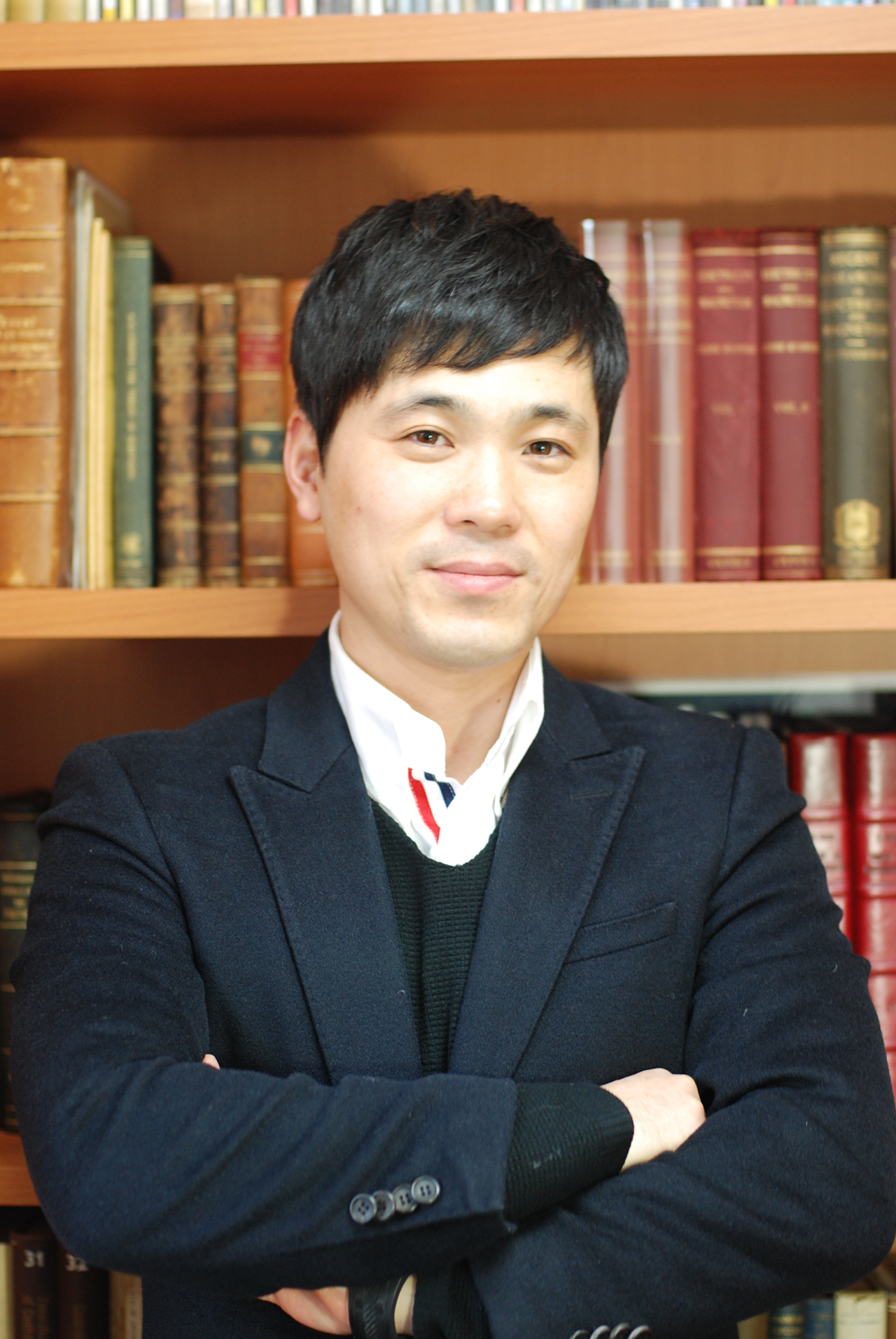
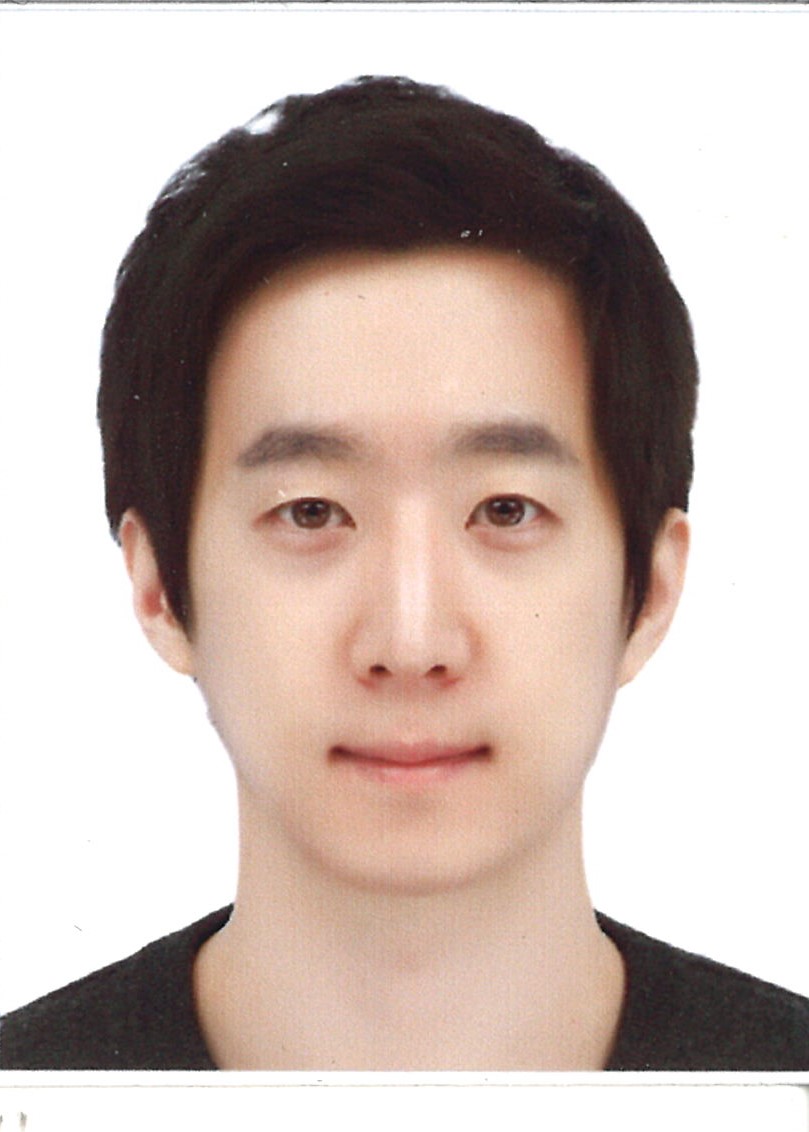
▲ (From Left to Right) Professor Na Yong-Su (Corresponding Author) and Doctor Yoo Min-Gu (First Author) of the Department of Nuclear Engineering
SNU College of Engineering (Dean Cha Kook-heon) announces on 14th that the research team led by Professor Na Yong-Su of the Department of Nuclear Engineering has uncovered the reason behind early plasma generation of tokamak through nuclear fusion.
To spur a nuclear fusion reaction in the fusion reactor, plasma must be generated. However, the complicated electromagnetic structure and measurement procedure of the tokamak have hindered the discovery of the principles of plasma generation for decades. Thus, researches so far have all been conducted, whilst facing obstacles, with an underlying assumption that the traditional discharge theory is applicable to plasma research.
Professor Na Yong-Su (Corresponding Author) and Doctor Yoo Min-Gu (First Author) have noticed research findings to largely contradict conventional discharge theories. Hence, they have hypothesized a new discharge theory that takes the unique electromagnetic structure and multi-dimensional plasma dynamics of fusion reactor into account.
The team has elicited the fact that plasma incurs an electron avalanche during its generation at the fusion reactor. By applying this information, they have further developed a particle based three-dimensional simulator and the “KSTAR” tokamak apparatus, which they have integrated into their follow-up experiments.
The research findings have been published online on the “Nature Communications” on August 30th. Professor Na’s team is the first in Korea on the field of nuclear fusion to have their research be published on Nature.
The application of the findings centers mainly on optimizing plasma generation in nuclear reactor and an example of this includes the ITER, a collaborative project between Korea, US, EU, Japan, China, and India to build the world’s largest magnetic fusion device.
The research has been conducted with the support of the Individual Basic Science & Engineering Research Program and the Basic Nuclear Fusion Research Program of the Ministry of Education, Science and Technology (MEST).
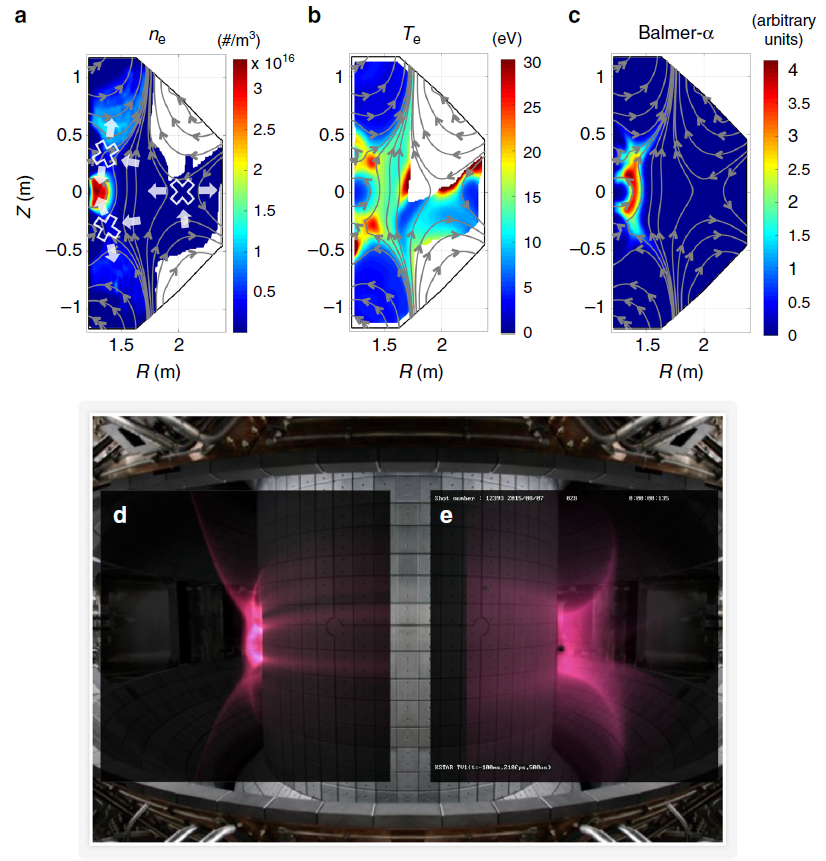
▲ Top: Result of Plasma Simulation Using Developed Code
Bottom: Comparison of Code Simulation (Left) and Test Result (Right)