loaction
- About
-
Academics
-
Undergraduate Programs
- Civil, Urban and Environmental Engineering
- Architecture and Architectural Engineering
- Mechanical Engineering
- Industrial Engineering
- Energy Resources Engineering
- Nuclear Engineering
- Materials Science and Engineering
- Electrical and Computer Engineering
- Naval Architecture and Ocean Engineering
- Computer Science and Engineering
- Aerospace Engineering
- Chemical and Biological Engineering
-
Graduate Programs
- Civil, Urban and Environmental Engineering
- Architecture and Architectural Engineering
- Mechanical Engineering
- Industrial Engineering
- Energy Systems Engineering
- Materials Science and Engineering
- Electrical and Computer Engineering
- Naval Architecture and Ocean Engineering
- Computer Science and Engineering
- Aerospace Engineering
- Chemical and Biological Engineering
- Interdisciplinary Program in Technology, Management, Economics and Policy
- Interdisciplinary Program in Urban Design
- Interdisciplinary Program in Bioengineering
- Interdisciplinary Program in Artificial Intelligence
- Interdisciplinary Program in Intelligent Space and Aerospace Systems
- Chemical Convergence for Energy and Environment Major
- Multiscale Mechanics Design Major
- Hybrid Materials Major
- Double Major Program
- Open Programs
-
Undergraduate Programs
- Research
- Prospective Students
- Campus Life
- International Office
- Communication
News
SNU Professor Min Hyuk Park’s Joint Research Team Reveals How ‘Oxygen Vacancies’ Determine Memory Performance
-
Uploaded by
대외협력실
-
Upload Date
Aug 27, 2026
-
Views
64
SNU Professor Min Hyuk Park’s Joint Research Team Reveals How ‘Oxygen Vacancies’ Determine Memory Performance
- World’s first real-time observation of the entire crystallization process of HZO thin films using synchrotron GIWAXS
- Reducing oxygen vacancies lowers the crystallization onset temperature by 30°C and increases the memory storage signal by approximately 11-fold
Findings provide new process-design guidelines for ferroelectrics used in next-generation nonvolatile memory and 3D-integrated semiconductors
Study published in Advanced Functional Materials
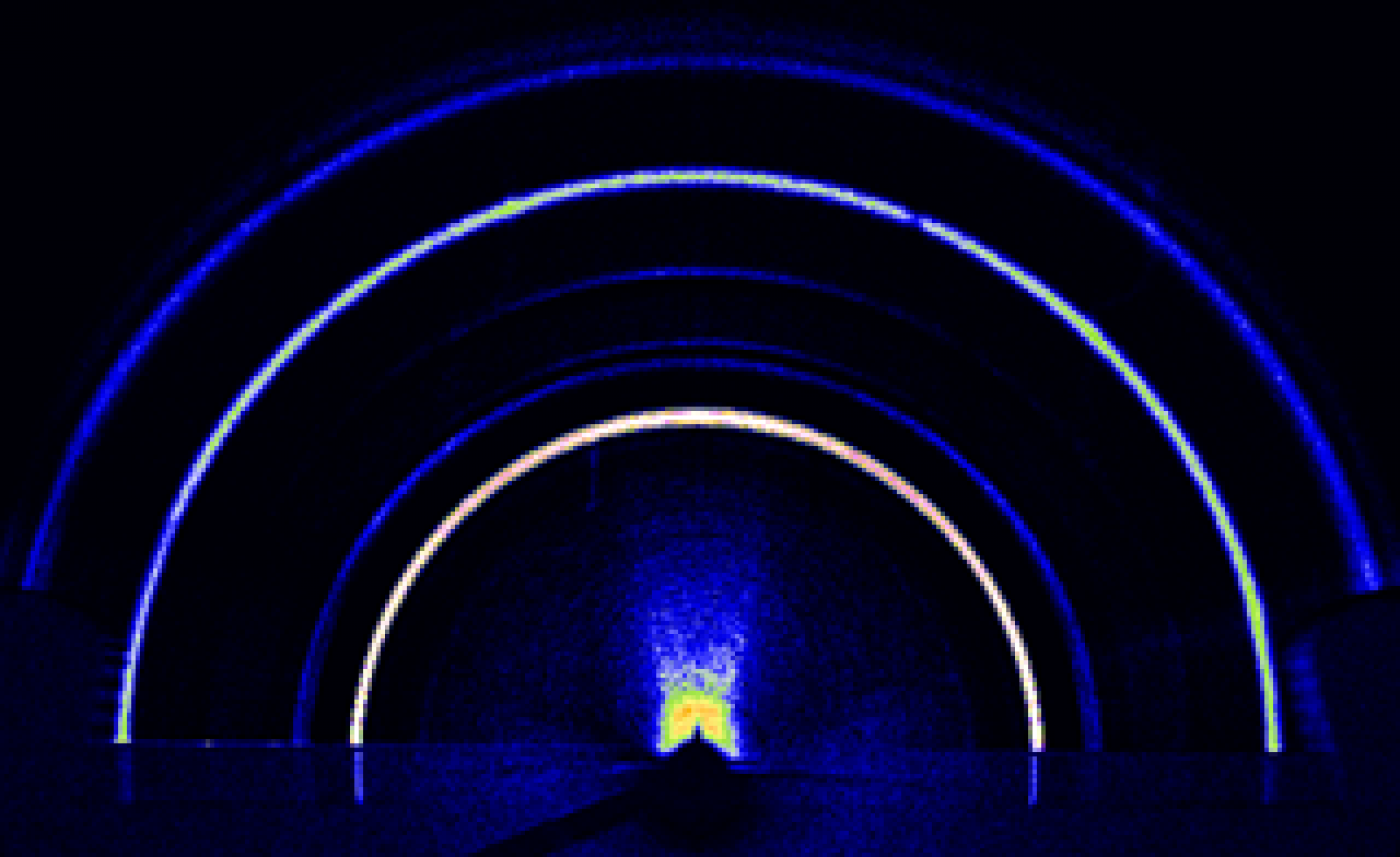
▲ Synchrotron X-ray diffraction patterns of HZO thin films measured in real time using GIWAXS at the Pohang Accelerator Laboratory.
By tracking changes in diffraction signals during heat treatment, the researchers identified how different oxygen-vacancy concentrations affect the onset of crystallization and the selection of the final crystalline phase.
Researchers have captured in real time the “birth moment” at which the performance of a next-generation memory material is determined. The key lies in controlling oxygen vacancies, microscopic defects created when oxygen atoms are missing from their normal positions.
A research team led by Professor Min Hyuk Park of the Department of Materials Science and Engineering at Seoul National University College of Engineering, in collaboration with Professor Yunseok Kim of Sungkyunkwan University, Professor Younghwan Lee of Chonnam National University, and Dr. Tae-Yeol Jeon of the Pohang Accelerator Laboratory, tracked in real time the entire process by which a ferroelectric phase capable of storing information forms during the heat treatment of hafnia-zirconia (HZO), a material attracting attention for next-generation nonvolatile memory. The researchers found that the concentration of oxygen vacancies changes both the crystallization temperature and the final crystalline phase, resulting in substantial differences in memory storage performance.
Ferroelectrics are materials capable of retaining their electrical state even after power is turned off. This makes them key candidate materials for nonvolatile memory that preserves information without power and for low-power semiconductor devices. Hafnia-based ferroelectrics, in particular, are highly compatible with conventional silicon semiconductor fabrication processes and can exhibit ferroelectricity even at thicknesses of only a few nanometers, making them an active area of research for next-generation high-density memory.
The challenge is that HZO does not possess ferroelectric properties from the outset. The orthorhombic phase responsible for ferroelectricity in HZO has an asymmetric atomic arrangement and is a metastable crystalline phase that, while not the most thermodynamically stable state, can be maintained under specific processing conditions. Rather than focusing solely on the final structure after heat treatment, the researchers examined the process by which crystals first emerge from an amorphous thin film and how different crystalline phases, including the ferroelectric phase, are subsequently selected. Such changes have been difficult to distinguish accurately using conventional analyses performed only before and after heat treatment.
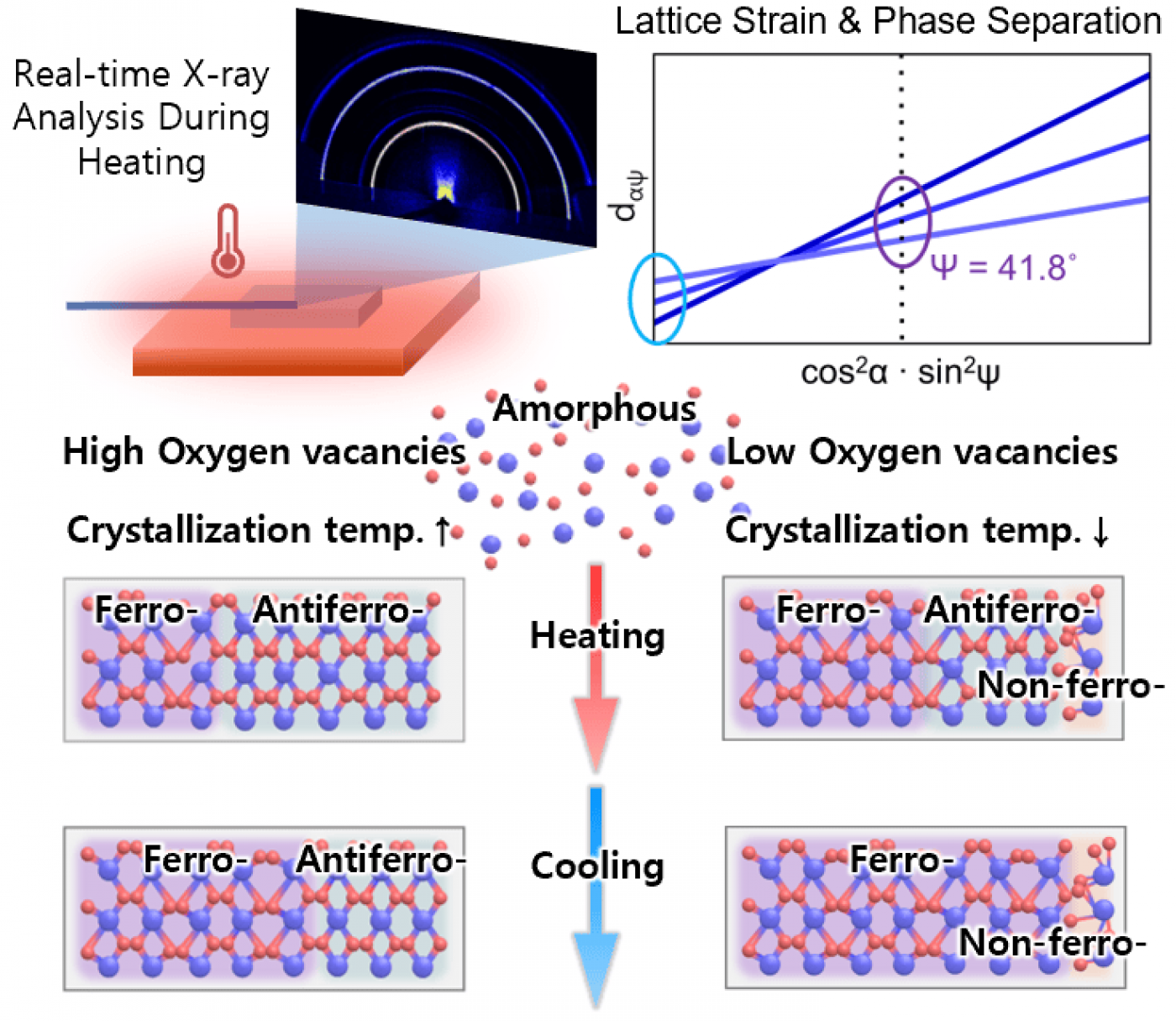
▲ Crystallization pathways of HZO thin films and the role of oxygen vacancies revealed through real-time GIWAXS analysis during heat treatment.
When oxygen vacancies are abundant, crystallization is delayed and the antiferroelectric phase persists longer. When oxygen vacancies are fewer, crystallization is promoted, favoring the formation of the ferroelectric phase.
The key variable in the study was the oxygen vacancy. An oxygen vacancy is an atomic-scale defect formed when an oxygen atom is missing from its normal position in HZO. The researchers fabricated 10-nm-thick HZO films with different oxygen-vacancy concentrations by varying the amount of ozone supplied during atomic layer deposition, and then compared how their crystallization pathways changed according to oxygen-vacancy concentration.
The researchers then used synchrotron radiation at the Pohang Accelerator Laboratory to perform real-time grazing-incidence wide-angle X-ray scattering (GIWAXS), continuously tracking the entire process as the initially amorphous films transformed into crystals during heating and stabilized into their final structures during cooling. They separately analyzed temperature-dependent lattice spacing and residual strain, the slight expansion or contraction remaining in the films after heat treatment, while also comparing grain size, growth orientation, and the relative proportions of different crystalline phases. This enabled the team to establish a continuous picture of how oxygen-vacancy concentration affects the entire process, from the onset of crystallization to grain growth, phase selection, and ultimately the electrical properties of the material.
* Grazing-incidence wide-angle X-ray scattering (GIWAXS): An analytical technique in which X-rays are directed at a thin film at a shallow angle, allowing changes in atomic arrangement to be identified from diffraction patterns.
The analysis showed that higher oxygen-vacancy concentrations delayed the crystallization of HZO. In films with more oxygen vacancies, rearrangement of the atomic structure and the initial formation of crystal nuclei were hindered, causing crystallization to begin only at higher temperatures. Even after crystallization began, lateral grain growth was suppressed, while the non-ferroelectric tetragonal phase, which does not generate electrical polarization, persisted relatively longer than the ferroelectric orthorhombic phase.
By contrast, in films with fewer oxygen vacancies, the energy barrier required for crystallization was lowered and grain growth proceeded more readily. As a result, crystallization began at a lower temperature, and the ferroelectric orthorhombic phase required for information storage formed more favorably. Measurements of local piezoresponse using atomic force microscopy and electrical polarization showed trends consistent with the structural analysis.
The differences were also clear quantitatively. Films with fewer oxygen vacancies began crystallizing at a temperature 30°C lower than films with higher oxygen-vacancy concentrations. At the same temperature of 400°C, their switchable polarization (2Pr), which represents the memory storage signal used to distinguish between binary states 0 and 1, was also approximately 11 times greater.
The significance of the study lies in establishing oxygen vacancies not simply as defects that should be eliminated, but as a key process variable that controls both the onset of crystallization and the pathway toward formation of the ferroelectric phase in HZO thin films. The ability to form the ferroelectric phase at lower temperatures is particularly noteworthy from a semiconductor-processing perspective. Achieving ferroelectricity at lower temperatures is advantageous for semiconductor back-end processing, where thermal damage to previously fabricated interconnects and devices must be minimized.
The relationship between oxygen vacancies and crystallization pathways identified in this study is expected to contribute to next-generation memory technologies, including embedded nonvolatile memory and 3D-integrated memory, supporting the development of high-density, low-power memory that can reliably retain information even when power is turned off in devices such as smartphones, automobiles, and Internet of Things systems.
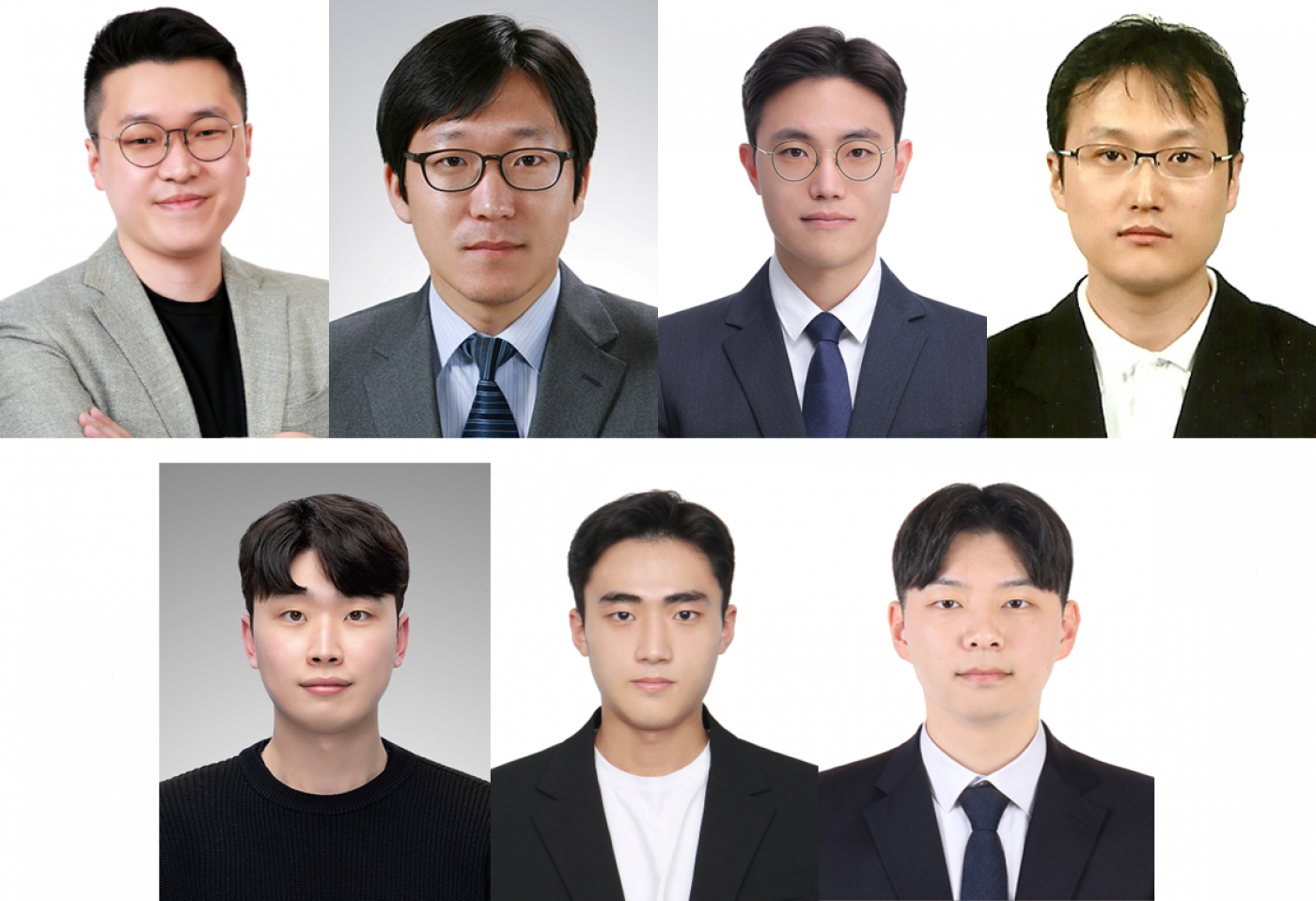
▲ From upper left: Professor Min Hyuk Park of Seoul National University; Professor Yunseok Kim of Sungkyunkwan University; Professor Younghwan Lee of Chonnam National University; Dr. Tae-Yeol Jeon of the Pohang Accelerator Laboratory; Ph.D. students Hyun Woo Jeong and Jaewook Lee of Seoul National University; and Ph.D. student Junseong Seo of Sungkyunkwan University.
Professor Min Hyuk Park said, “The significance of this study lies in identifying oxygen vacancies not simply as defects that need to be removed, but as a key variable for engineering the crystallization onset and the pathway of ferroelectric-phase formation in HZO thin films. By directly tracking structural changes during heat treatment through real-time synchrotron analysis, we were able to explain more clearly how the final electrical properties are established.”
He added, “We expect that the relationship between oxygen vacancies and crystallization pathways identified in this study can be applied to materials design for next-generation nonvolatile memory and highly integrated semiconductor processes, where high ferroelectric performance must be achieved within a limited thermal budget.”
Co-first author Hyun Woo Jeong, an integrated M.S./Ph.D. student at Seoul National University, studies oxygen-vacancy and stress control in hafnium-oxide-based ferroelectrics, as well as synchrotron-based real-time structural analysis. He plans to continue developing next-generation nonvolatile memory technologies in the fields of semiconductor processing and memory-device research and development.
Co-first author Jaewook Lee, also an integrated M.S./Ph.D. student at Seoul National University, studies low-temperature crystallization processes and new electrode materials for hafnium-oxide-based ferroelectrics. He plans to continue developing high-performance, low-power next-generation nonvolatile memory technologies in the fields of semiconductor processing and memory devices.
This research was supported by the Ministry of Science and ICT through the National Research Foundation of Korea.
[Reference Materials]
Title / Journal: Oxygen-Vacancy-Regulated Crystallization and Ferroelectric Phase Stabilization in Hf0.5Zr0.5O2 Thin Films, Advanced Functional Materials
DOI: 10.1002/adfm.77918
[Contact Information]
Professor Min Hyuk Park, Department of Materials Science and Engineering
Seoul National University / +82-2-880-7160 / minhyuk.park@snu.ac.kr