loaction
- About
-
Academics
-
Undergraduate Programs
- Civil, Urban and Environmental Engineering
- Architecture and Architectural Engineering
- Mechanical Engineering
- Industrial Engineering
- Energy Resources Engineering
- Nuclear Engineering
- Materials Science and Engineering
- Electrical and Computer Engineering
- Naval Architecture and Ocean Engineering
- Computer Science and Engineering
- Aerospace Engineering
- Chemical and Biological Engineering
-
Graduate Programs
- Civil, Urban and Environmental Engineering
- Architecture and Architectural Engineering
- Mechanical Engineering
- Industrial Engineering
- Energy Systems Engineering
- Materials Science and Engineering
- Electrical and Computer Engineering
- Naval Architecture and Ocean Engineering
- Computer Science and Engineering
- Aerospace Engineering
- Chemical and Biological Engineering
- Interdisciplinary Program in Technology, Management, Economics and Policy
- Interdisciplinary Program in Urban Design
- Interdisciplinary Program in Bioengineering
- Interdisciplinary Program in Artificial Intelligence
- Interdisciplinary Program in Intelligent Space and Aerospace Systems
- Chemical Convergence for Energy and Environment Major
- Multiscale Mechanics Design Major
- Hybrid Materials Major
- Double Major Program
- Open Programs
-
Undergraduate Programs
- Research
- Prospective Students
- Campus Life
- International Office
- Communication
Research Achievements
SNU Engineering Hosts ‘SNU Mechano Intelligence Conference,’ Showcasing the Future of Machine Intelligence
-
Uploaded by
대외협력실
-
Upload Date
Mar 19, 2026
-
Views
793
SNU Engineering Hosts ‘SNU Mechano Intelligence Conference,’ Showcasing the Future of Machine Intelligence
-A forum for discussing the convergence paradigm of robotics, AI, and autonomous manufacturing
-Eight leading scholars propose survival strategies for the future manufacturing industry
-“Securing AI-trainable data is key for industry… Universities must serve as hubs for robotics startups and commercialization”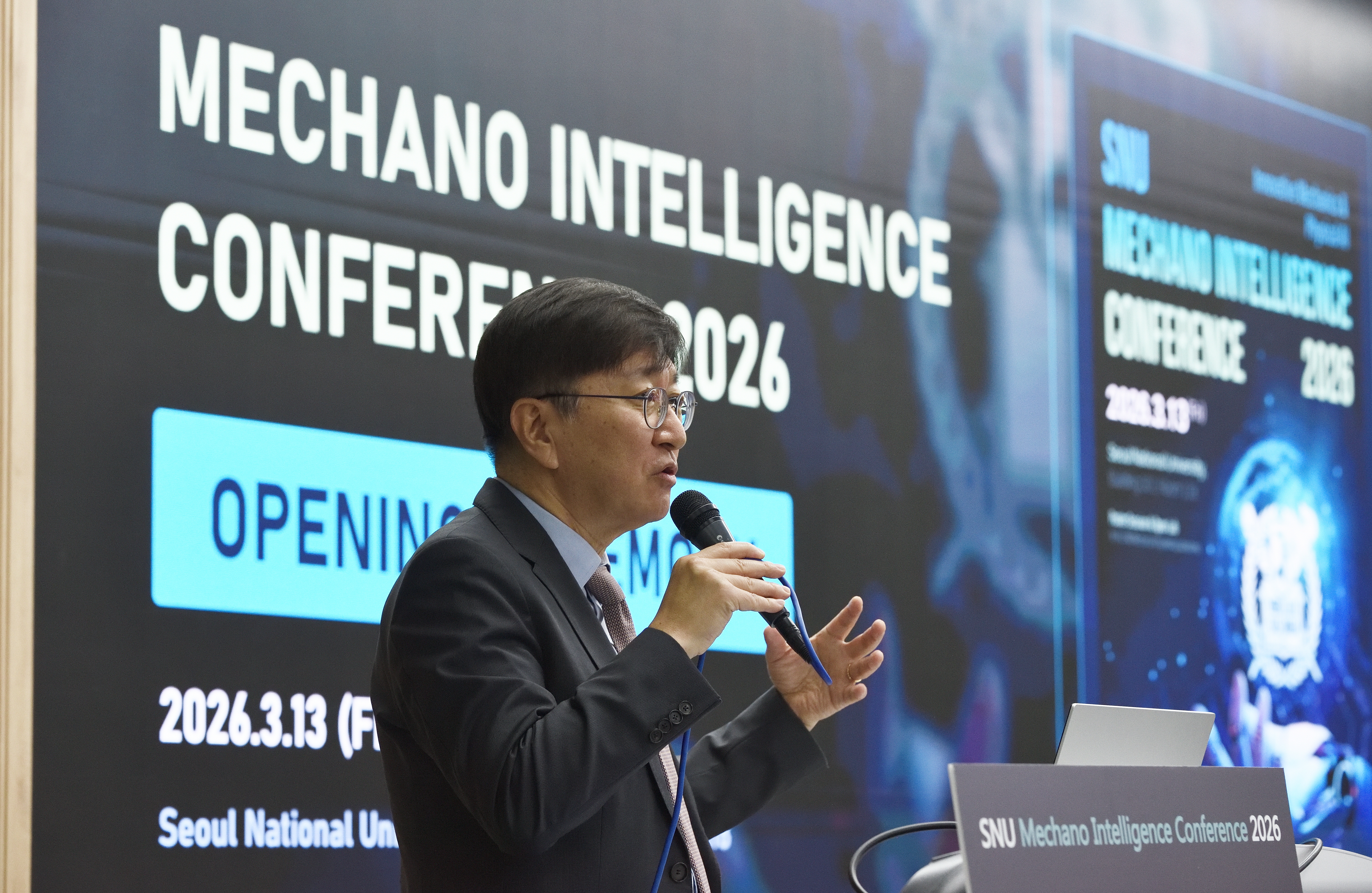
▲ Photo 1. Young-Oh Kim, Dean of the College of Engineering at Seoul National University, delivering congratulatory remarks at SNU MIC 2026
Seoul National University College of Engineering announced that it successfully hosted the ‘SNU Mechano Intelligence Conference 2026 (SNU MIC 2026)’ on the 13th at Building 1 of the Gwanak Campus, with approximately 380 participants from academia and industry both in Korea and abroad in attendance.
Held for the first time this year amid growing societal interest in Physical AI, SNU MIC 2026 was organized as an academic forum to examine the convergence paradigm of robotics, artificial intelligence (AI), and autonomous manufacturing—key drivers of future industrial competitiveness—and to explore survival strategies for Korean companies.
On the day of the conference, researchers from SNU and other institutions presented a total of 91 posters on mechano intelligence. In addition, eight world-renowned scholars in mechanical engineering delivered keynote talks that went beyond technical achievements to address practical strategies for productivity innovation and technology commercialization in industrial settings.
■ “Design is the key weapon of global innovators… the era of AI-driven auto-design is coming”
One of the central themes of SNU MIC 2026 was “Physical AI and innovation in design.”
Taegi Min, Director of the S&H Institute of Technology, emphasized the critical importance of component and process design while analyzing the success formulas of global companies. “The cost competitiveness of companies such as Apple, SpaceX, and Dyson ultimately lies in the power of design,” he said. “If scientists discover things, engineers create new ones—and to achieve true design innovation, engineers must deeply understand humans.”
There were also discussions highlighting that the era of AI-led design has already begun. Namwoo Kang, Professor at KAIST’s Cho Chun Shik Graduate School of Mobility, noted, “We are moving beyond simple optimization or generative design into an era of auto-design, where AI performs design tasks independently,” emphasizing that Korean companies must quickly adapt to this shift to maintain global competitiveness.
■ “Blind faith in robot AI is dangerous… autonomous manufacturing must start from factory design”
Speakers also offered critical perspectives on companies introducing AI and robotics into production environments.
Chong Woo Park, Professor of Mechanical Engineering at SNU (former President of the IEEE Robotics and Automation Society), warned, “Robot data is far more complex and noisy than vision or language data, so it is extremely dangerous to assume that simply feeding massive amounts of data into foundation models will solve the problem.” He stressed that incorporating “inductive bias for robotics,” reflecting the physical characteristics of robotic systems, will be a decisive factor in the success of industrial AI investments.
The proper direction for adopting autonomous manufacturing was also discussed. Jungkuk Min, Executive Vice President at Hyundai Motor and Kia’s Manufacturing Software Development Division, stated, “True autonomous manufacturing cannot be achieved by simply layering automation onto existing production lines,” adding that “factories must be designed from the outset with AI-integrated structures.” He also shared real-world applications, including soft-material gripping technologies and automated attachment of waterproof rubber components for vehicle doors in Hyundai production lines.
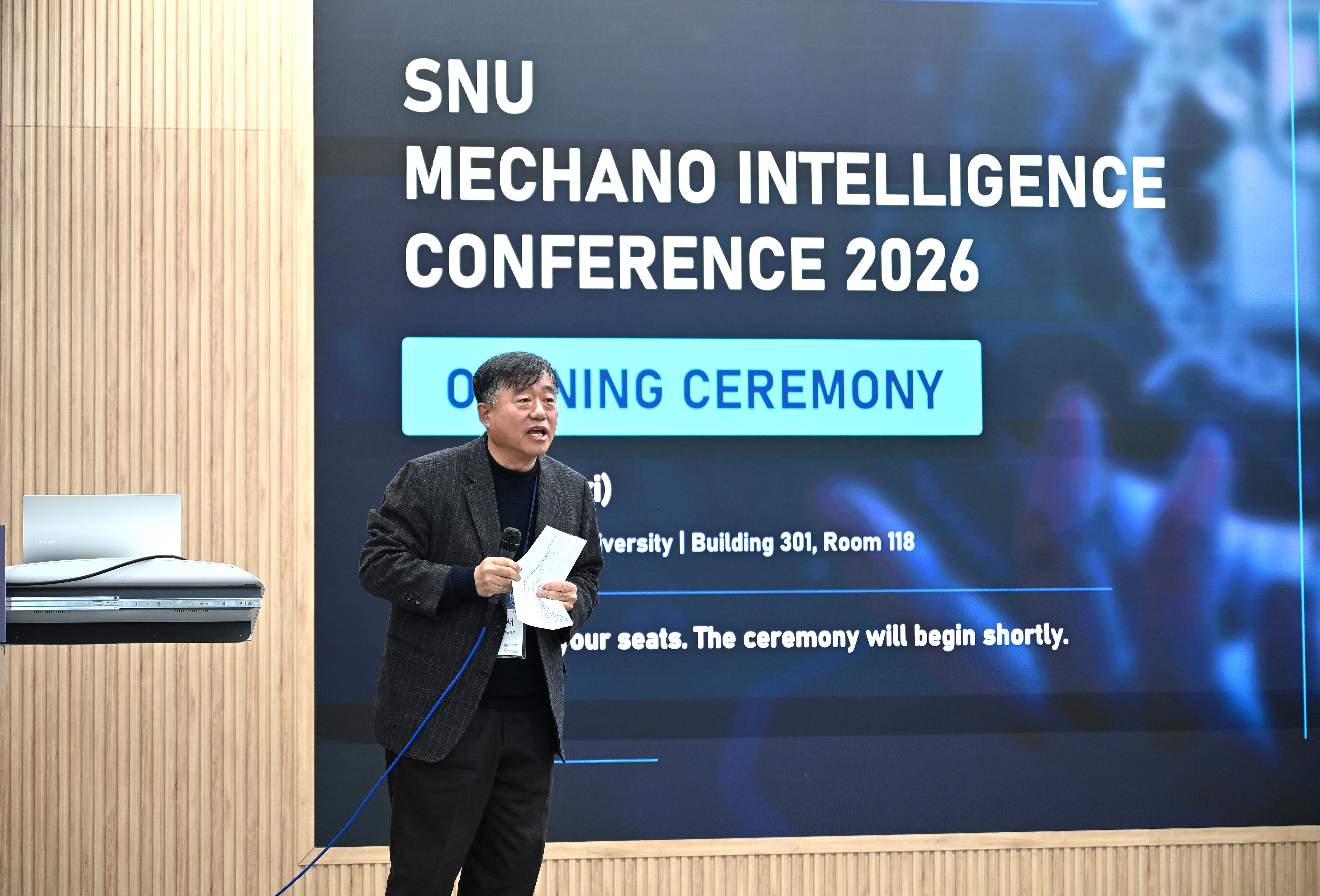
▲ Photo 2. Heui Jae Pahk, Distinguished Professor of Mechanical Engineering at SNU, delivering congratulatory remarks at SNU MIC 2026
■ “AI-ready data is the real competitive edge… need for a ‘Robotics Institute’ to drive commercialization”
The conference also featured strong recommendations regarding data strategies and the evolving role of universities in industrial innovation.
Byeng Dong Youn, Professor of Mechanical Engineering at SNU, pointed out flawed data collection practices in industrial settings. “Blindly accumulating raw data without processing is of no use,” he said, emphasizing that “the real competitive advantage lies in curating and structuring data in forms that AI can effectively interpret and learn from.”
Speakers also highlighted the importance of building infrastructure to bring technologies out of the lab and into real-world applications. Kyu Jin Cho, Chair of Mechanical Engineering at SNU (President-Elect of IEEE RAS), stated, “Outstanding research must not remain confined to academic papers,” adding that “SNU should take the lead in building a robotics ecosystem that actively supports technology startups and commercialization, and establish a proper ‘Robotics Institute’ as a central hub for this effort.”
In addition, Kyoung Mu Lee, Distinguished Professor of Electrical and Computer Engineering at SNU, explored the industrial synergies that could be created by combining deep learning-based visual intelligence with physical mechanical systems. Jaehyung Joo, Professor at Shanghai Jiao Tong University (SJTU), presented the potential of next-generation hardware through intelligent structural design based on metamaterials and 4D printing.
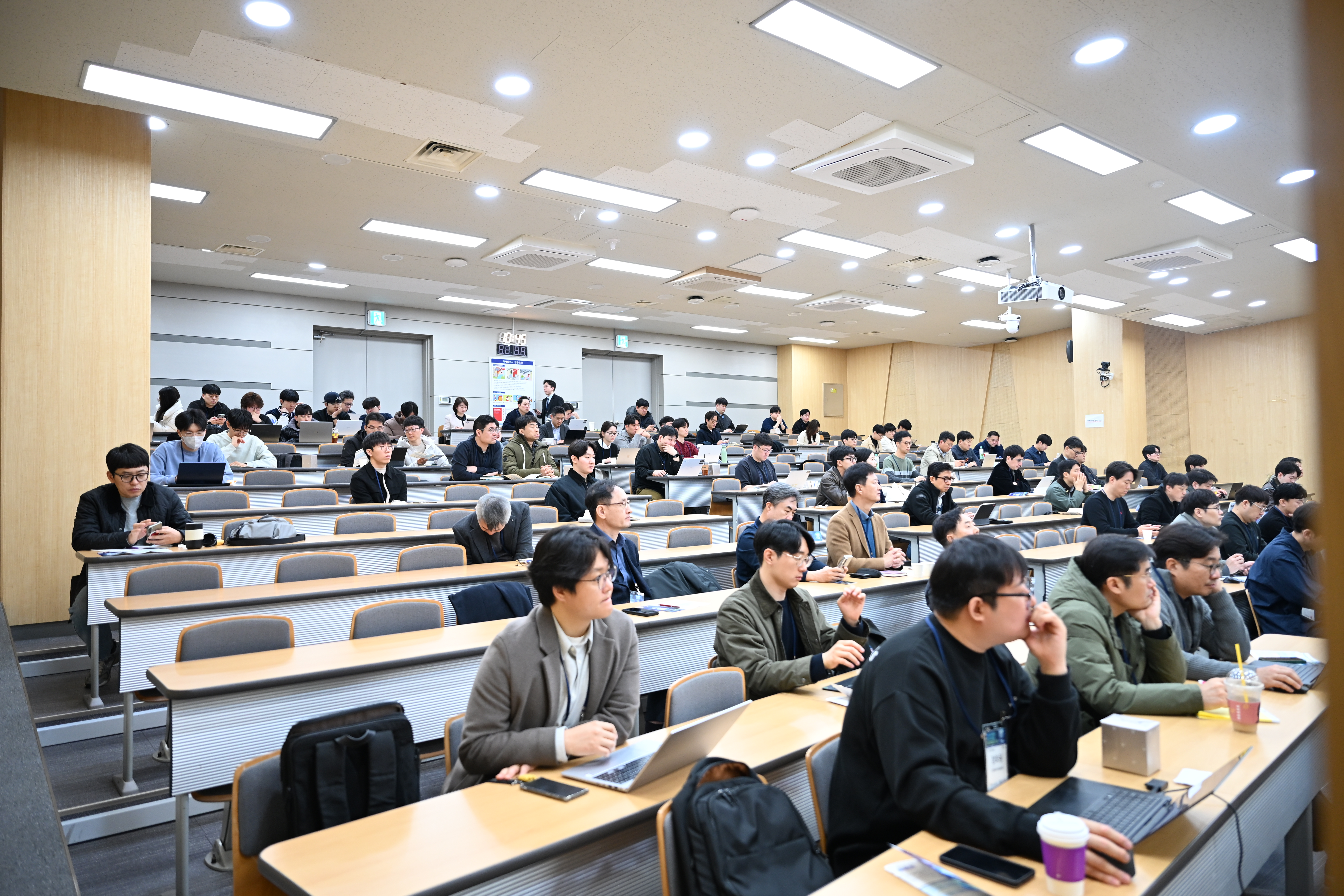
SNU MIC 2026 was widely recognized for presenting a blueprint of how mechanical engineering-based convergence technologies can transform cost structures and production methods in real industries, while also establishing a new milestone for building an industry–academia–research ecosystem to enable successful commercialization.
Sung-Hoon Ahn, Director of the SNU Institute of Precision Mechanical Design (Professor of Mechanical Engineering), who organized the inaugural conference, stated, “We organized this conference to share insights from leading experts on which technologies will become practical and when, amid the megatrend of AI and robotics transforming the world.”
He added, “By deeply understanding the mechanisms of how humans and the physical world operate and integrating appropriate AI algorithms, it becomes possible to realize high-efficiency ‘mechano intelligence’ that cannot be achieved by data-driven AI alone.”
[Contact Information]
Kyung-Tae Lee, Principal Researcher, SNU RISE Project Group / +82-2-880-1895 / lekyta83@snu.ac.kr