loaction
- About
-
Academics
-
Undergraduate Programs
- Civil, Urban and Environmental Engineering
- Architecture and Architectural Engineering
- Mechanical Engineering
- Industrial Engineering
- Energy Resources Engineering
- Nuclear Engineering
- Materials Science and Engineering
- Electrical and Computer Engineering
- Naval Architecture and Ocean Engineering
- Computer Science and Engineering
- Aerospace Engineering
- Chemical and Biological Engineering
-
Graduate Programs
- Civil, Urban and Environmental Engineering
- Architecture and Architectural Engineering
- Mechanical Engineering
- Industrial Engineering
- Energy Systems Engineering
- Materials Science and Engineering
- Electrical and Computer Engineering
- Naval Architecture and Ocean Engineering
- Computer Science and Engineering
- Aerospace Engineering
- Chemical and Biological Engineering
- Interdisciplinary Program in Technology, Management, Economics and Policy
- Interdisciplinary Program in Urban Design
- Interdisciplinary Program in Bioengineering
- Interdisciplinary Program in Artificial Intelligence
- Interdisciplinary Program in Intelligent Space and Aerospace Systems
- Chemical Convergence for Energy and Environment Major
- Multiscale Mechanics Design Major
- Hybrid Materials Major
- Double Major Program
- Open Programs
-
Undergraduate Programs
- Research
- Prospective Students
- Campus Life
- International Office
- Communication
Research Achievements
SNU Prof. Youngjib Ham Receives ASCE 2025 Thomas Fitch Rowland Prize
-
Uploaded by
대외협력실
-
Upload Date
May 22, 2026
-
Views
228
SNU Prof. Youngjib Ham Receives ASCE 2025 Thomas Fitch Rowland Prize
- One of the most prestigious awards in construction engineering, with a 140-year history, presented annually to the author of the best paper
- Recognized for identifying the impact of heat radiation on construction sites through microclimate simulation based on meteorological data and geometric modeling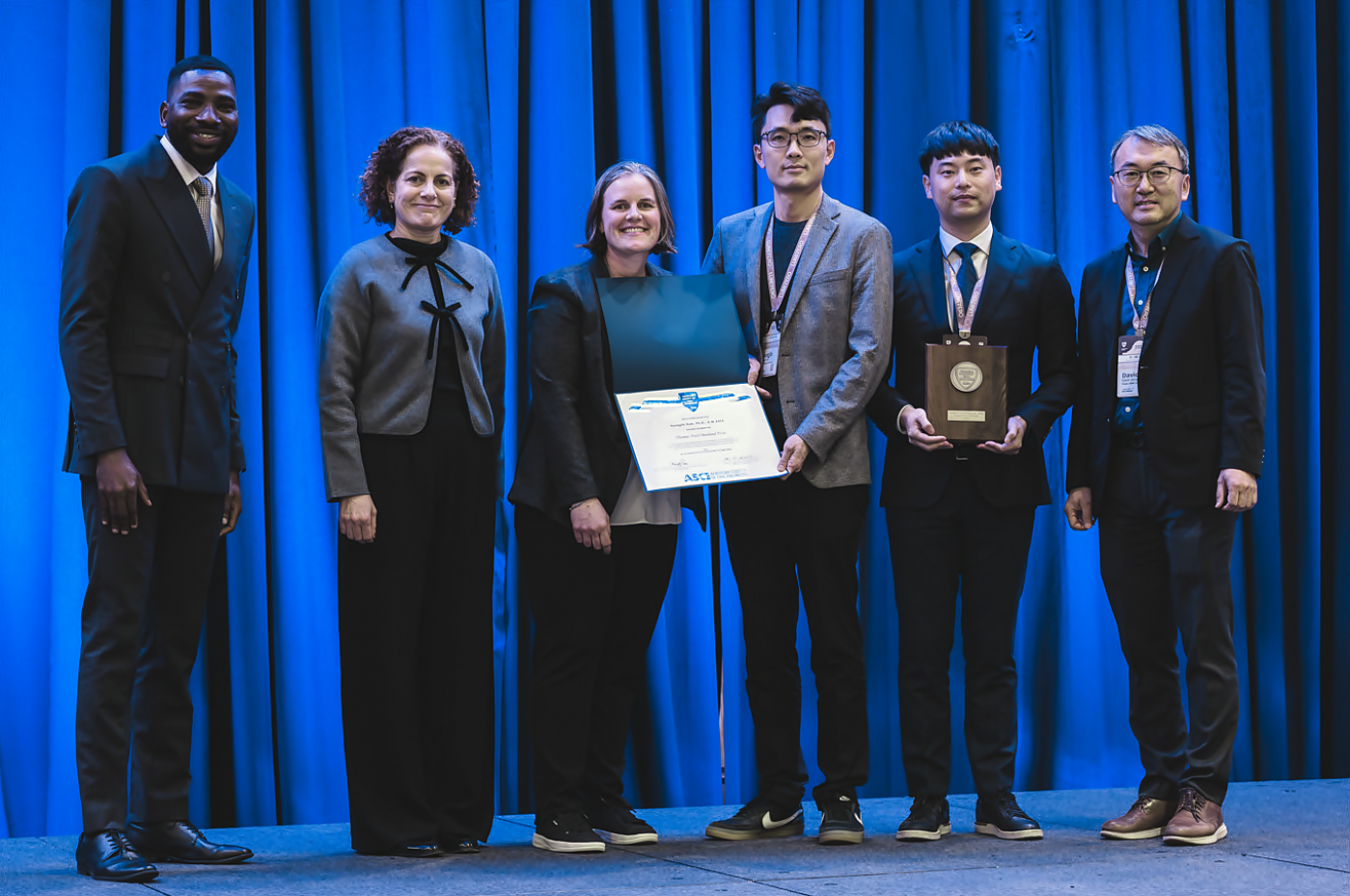
▲ (From left) Ibukun Awolusi, Professor at The University of Texas at San Antonio; Carol Menassa, Professor at the University of Michigan; Katerina Lachinova, Director at ASCE; Youngjib Ham, Professor in the Department of Civil, Urban and Environmental Engineering at Seoul National University; Yujun Kim, Professor at The University of Texas Rio Grande Valley; David Jeong, Professor at Texas A&M University
Seoul National University College of Engineering announced that Professor Youngjib Ham of the Department of Civil, Urban and Environmental Engineering received the 2025 Thomas Fitch Rowland Prize at the 2026 Construction Research Congress, hosted by the American Society of Civil Engineers (ASCE), held in San Antonio, Texas, on March 19.
Established in 1882, the Thomas Fitch Rowland Prize is one of the most prestigious awards in the field of construction engineering, with a 140-year history. It is presented annually by ASCE to the author of the most outstanding paper published worldwide in the field. Professor Ham was selected as the top paper awardee of the year, competing against leading scholars from around the globe.
The award-winning paper, titled “Revealing the Impact of Heat Radiation on Construction: A Microclimate Simulation Utilizing Meteorological Data and Geometric Modeling,” proposes a microclimate simulation method that integrates real-world meteorological data with 3D geometric modeling. The study quantitatively analyzes how climate factors—particularly heat radiation—affect construction sites and processes, and presents practical solutions, earning recognition for both its academic originality and real-world applicability.
In particular, the study’s practical value lies in its ability to predict localized heat conditions—such as heat radiation—that cannot be captured by standard weather forecasts, thereby helping ensure both worker safety and construction quality.
For example, by applying Professor Ham’s simulation, it becomes possible to identify high-risk time periods when the perceived temperature in specific work zones can exceed 40°C due to sunlight reflected from surrounding terrain or structures. Site managers can use this information to reschedule work to cooler morning hours, reducing the risk of heat-related illnesses among workers. Similarly, tasks such as concrete pouring—which are vulnerable to cracking due to rapid moisture evaporation under high heat—can be shifted to nighttime, enabling immediate and effective, customized responses. In essence, the research transforms weather—traditionally an uncontrollable variable—into predictable data, enabling proactive prevention of safety accidents and construction defects.
“I am very pleased that our research, which integrates field data and simulation to address construction environment and safety challenges, has been recognized globally by a prestigious international society with a long history,” said Professor Ham. “We will continue to pursue leading interdisciplinary research that contributes to advancements in construction automation and data-driven construction management.”
[Contact Information]
Youngjib Ham, Professor, Smart Construction Laboratory, Department of Civil, Urban and Environmental Engineering, Seoul National University / +82-2-880-7345 / yj.ham@snu.ac.kr