loaction
- About
-
Academics
-
Undergraduate Programs
- Civil, Urban and Environmental Engineering
- Architecture and Architectural Engineering
- Mechanical Engineering
- Industrial Engineering
- Energy Resources Engineering
- Nuclear Engineering
- Materials Science and Engineering
- Electrical and Computer Engineering
- Naval Architecture and Ocean Engineering
- Computer Science and Engineering
- Aerospace Engineering
- Chemical and Biological Engineering
-
Graduate Programs
- Civil, Urban and Environmental Engineering
- Architecture and Architectural Engineering
- Mechanical Engineering
- Industrial Engineering
- Energy Systems Engineering
- Materials Science and Engineering
- Electrical and Computer Engineering
- Naval Architecture and Ocean Engineering
- Computer Science and Engineering
- Aerospace Engineering
- Chemical and Biological Engineering
- Interdisciplinary Program in Technology, Management, Economics and Policy
- Interdisciplinary Program in Urban Design
- Interdisciplinary Program in Bioengineering
- Interdisciplinary Program in Artificial Intelligence
- Interdisciplinary Program in Intelligent Space and Aerospace Systems
- Chemical Convergence for Energy and Environment Major
- Multiscale Mechanics Design Major
- Hybrid Materials Major
- Double Major Program
- Open Programs
-
Undergraduate Programs
- Research
- Prospective Students
- Campus Life
- International Office
- Communication
Research Achievements
SNU Researchers Develops AI Agent Technology to Automate Semiconductor Design Verification
-
Uploaded by
대외협력실
-
Upload Date
Jul 03, 2026
-
Views
1379
SNU Researchers Develops AI Agent Technology to Automate Semiconductor Design Verification
- Enabling commercialization of automated semiconductor EDA technologies and improving collaborative productivity
- Two papers accepted at ICML 2026, a top-tier conference in artificial intelligence
- Recipient of Outstanding Research Award and Best Poster Award in collaboration with Samsung AI Center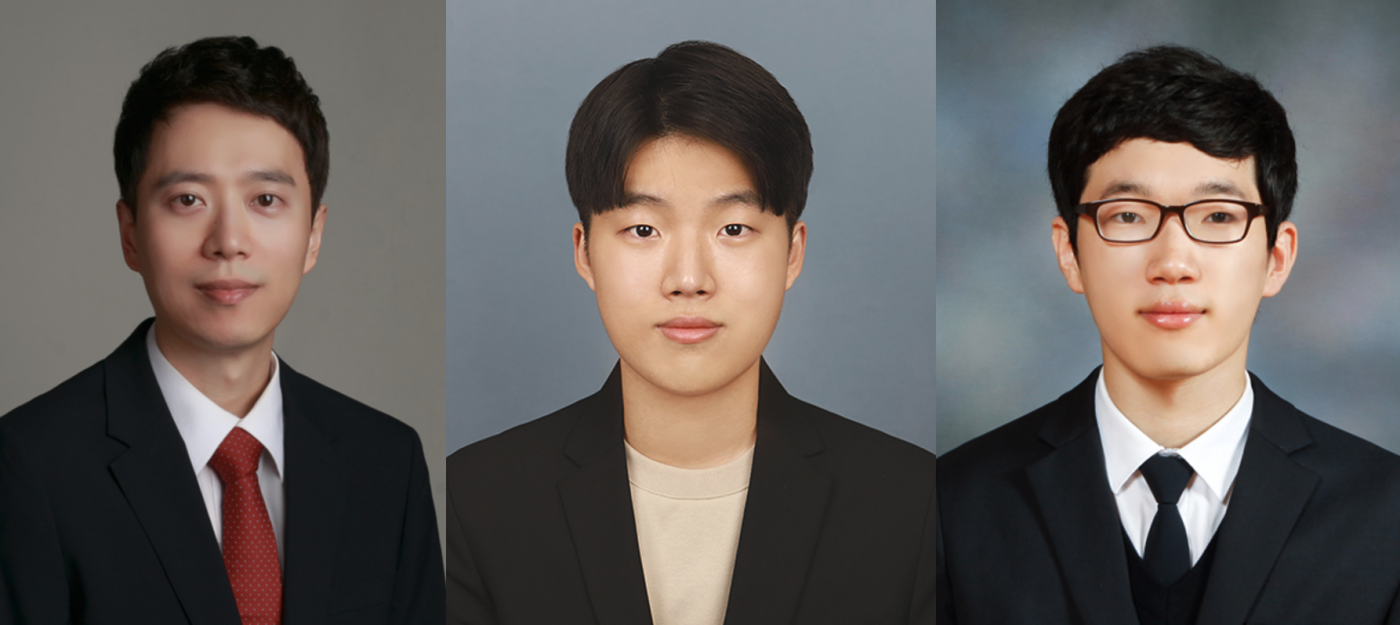
▲ (Left) Prof. Hyun Oh Song of Seoul National University receives the Outstanding Research Award at the Samsung AI Center NPRC Workshop (Right) From left: Youngin Kim (Researcher, SNU), Prof. Hyun Oh Song (SNU), Jinuk Kim (Researcher, SNU)
Seoul National University College of Engineering announced that a research team led by Prof. Hyun Oh Song of the Department of Computer Science and Engineering, in collaboration with Samsung AI Center, has developed “Rule2DRC,” an AI agent technology that automatically generates inspection codes required for semiconductor design verification.
Before fabrication, semiconductor chips must undergo Design Rule Check (DRC) to verify compliance with thousands of design rules. This process requires converting natural-language design rules into machine-executable DRC scripts, a highly complex task traditionally performed manually by expert engineers.
To address this challenge, the team developed Rule2DRC, a large-scale benchmark that evaluates AI’s ability to translate human-written design rules into executable verification scripts. The system goes beyond static comparison by executing AI-generated scripts on real verification engines to assess functional correctness. This work is expected to significantly reduce the cost and labor involved in repetitive semiconductor verification tasks and open new possibilities for AI-driven automation in chip design workflows.
The research paper titled “Rule2DRC: Benchmarking LLM Agents for DRC Script Synthesis with Execution-Guided Test Generation” has been accepted for presentation at ICML 2026, one of the most prestigious conferences in artificial intelligence.
Writing DRC scripts is a labor-intensive process that requires expertise in specialized languages such as KLayout and SVRF, as well as deep knowledge of semiconductor fabrication processes. Each new process node requires engineers to manually rewrite verification scripts from scratch.
Although previous studies have attempted to automate this process using AI, they were limited by small evaluation scales and reliance on code similarity metrics without executing the generated scripts. In addition, many approaches required prior access to ground-truth test data during code generation.
As a result, accurately translating natural-language design rules into executable scripts and reliably verifying their functional correctness has remained an open challenge.
To overcome these limitations, Prof. Song’s team, in collaboration with Samsung researchers, developed the large-scale benchmark Rule2DRC and an AI agent application capable of deployment in real industrial environments.
Rule2DRC is an evaluation tool that measures the capability of large language model (LLM)-based AI to generate inspection codes by interpreting human-written design rules. Comprising 1,000 “design rule–inspection code” problem pairs and 13,921 evaluation chip layouts (semiconductor design schematics), the tool goes beyond simply assessing code similarity by directly executing AI-generated codes on an actual verification engine to evaluate whether they function correctly.
The team also proposed “SplitTester,” a technique that selects the most accurate script among multiple AI-generated candidates based on execution results. This approach can significantly reduce the cost of writing and validating verification scripts and accelerate the development of AI-driven automation systems in electronic design automation (EDA).
In addition to the ICML 2026–accepted study, the research team also developed a “layout-native AI agent GUI app” that can be deployed in Samsung’s internal operating environment. Reflecting engineers’ real-world workflows, the application was designed to allow users to view semiconductor layouts and generate inspection codes with AI side by side on a single interface.
Prof. Song worked closely with Samsung AI Center researchers, including on-site collaboration in secure research environments, to ensure that the application could operate in Samsung’s internal systems. Integration with Samsung’s in-house LLM is currently underway.
During demonstrations, the AI agent successfully interpreted natural-language instructions, selected target regions in chip layouts, and automatically modified geometric features such as corners. This highlights the realization of a “layout-native workflow,” where AI agents simultaneously understand and process both layout data and verification scripts.
In recognition of these achievements, Prof. Song received the Outstanding Research Award, and researcher Jinuk Kim received the Best Poster Award at the Samsung AI Center NPRC Workshop.
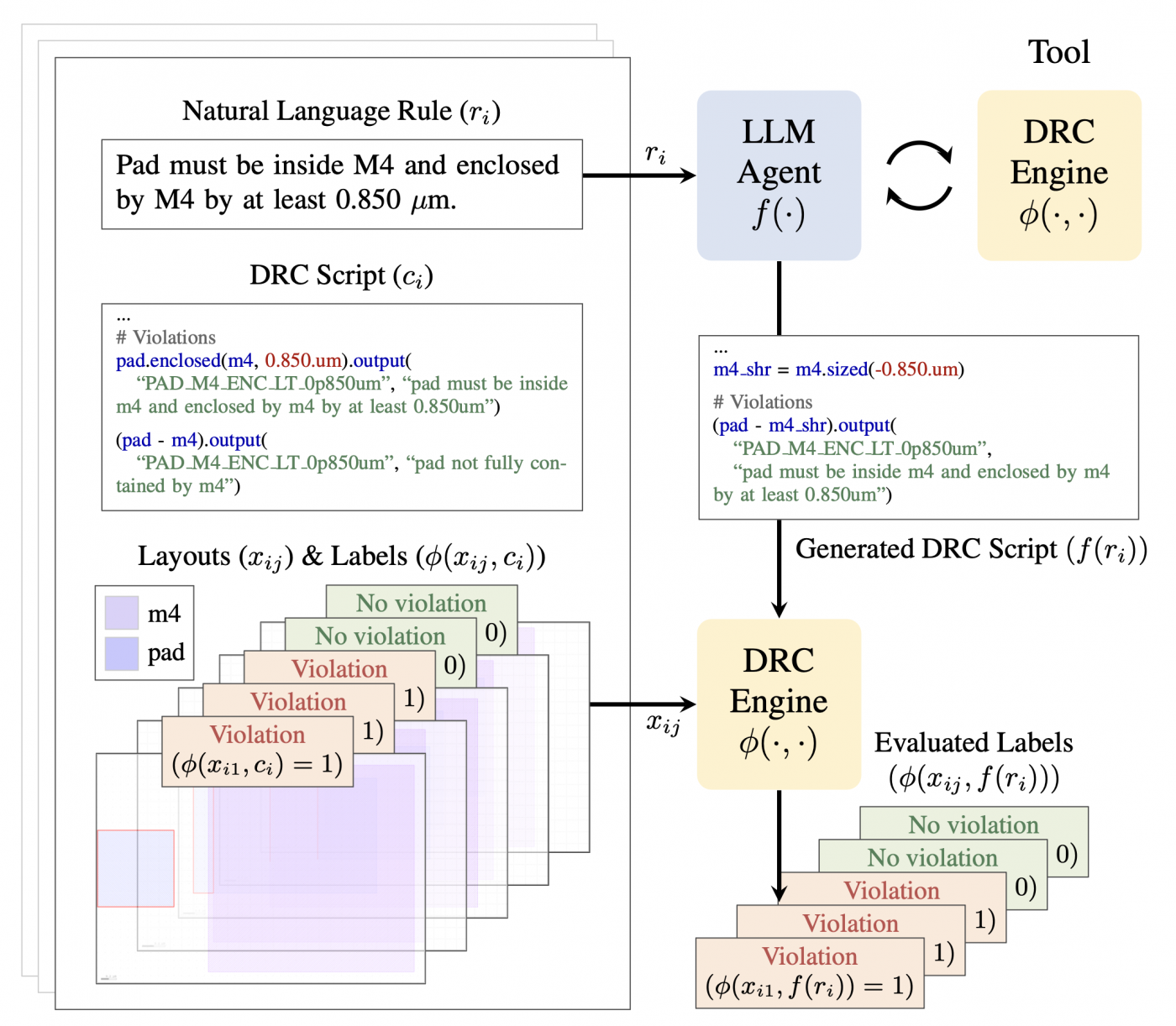
▲ Figure 1. Conceptual diagram of Rule2DRC
The system converts natural-language semiconductor design rules into DRC scripts using an LLM agent, then executes the generated scripts on chip layouts and compares violation results with ground truth to evaluate accuracy.
Rule2DRC and the layout-native AI agent GUI application are expected to automate the generation and validation of verification scripts, reducing engineers’ repetitive workload and lowering costs associated with adopting new process nodes. Because both technologies are designed for direct deployment in industrial environments without additional conversion steps, they are expected to accelerate the commercialization of semiconductor EDA automation and improve productivity in real-world engineering workflows.
Prof. Hyun Oh Song commented, “This work is meaningful in that it addresses real industrial challenges in semiconductor design verification using AI agents and goes beyond academic contributions by delivering a deployable GUI application for real-world environments. Moving forward, we plan to enhance the system with natural-language feedback-based layout editing and multimodal agent capabilities, quantitatively evaluate productivity gains in industrial settings, and ultimately develop a fully autonomous AI agent.”
Jinuk Kim, the first author of the paper and a researcher at SNU, will work as a research intern at AWS AI this summer.
In addition to the NPRC project conducted with Samsung AI Center, Prof. Song’s team also developed a new world model technique called “Identifiable Token Correspondence,” which will be presented at ICML 2026. World models enable AI systems to simulate future scenarios internally without direct interaction with real environments, thereby improving learning efficiency.
While recent world models have shown rapid progress, they often fail to accurately capture object positions and temporal continuity. To address this, the team introduced a method that selectively reuses important tokens from previous frames, improving spatial and temporal prediction accuracy. As a result, the model achieved state-of-the-art performance on reinforcement learning benchmarks such as Crafter and Atari 100k, where agents must act based on limited experience and memory.
* Crafter and Atari 100k: Widely used reinforcement learning benchmarks developed by Google Research and Google DeepMind to evaluate an AI agent’s ability to learn effective behaviors from limited interactions.
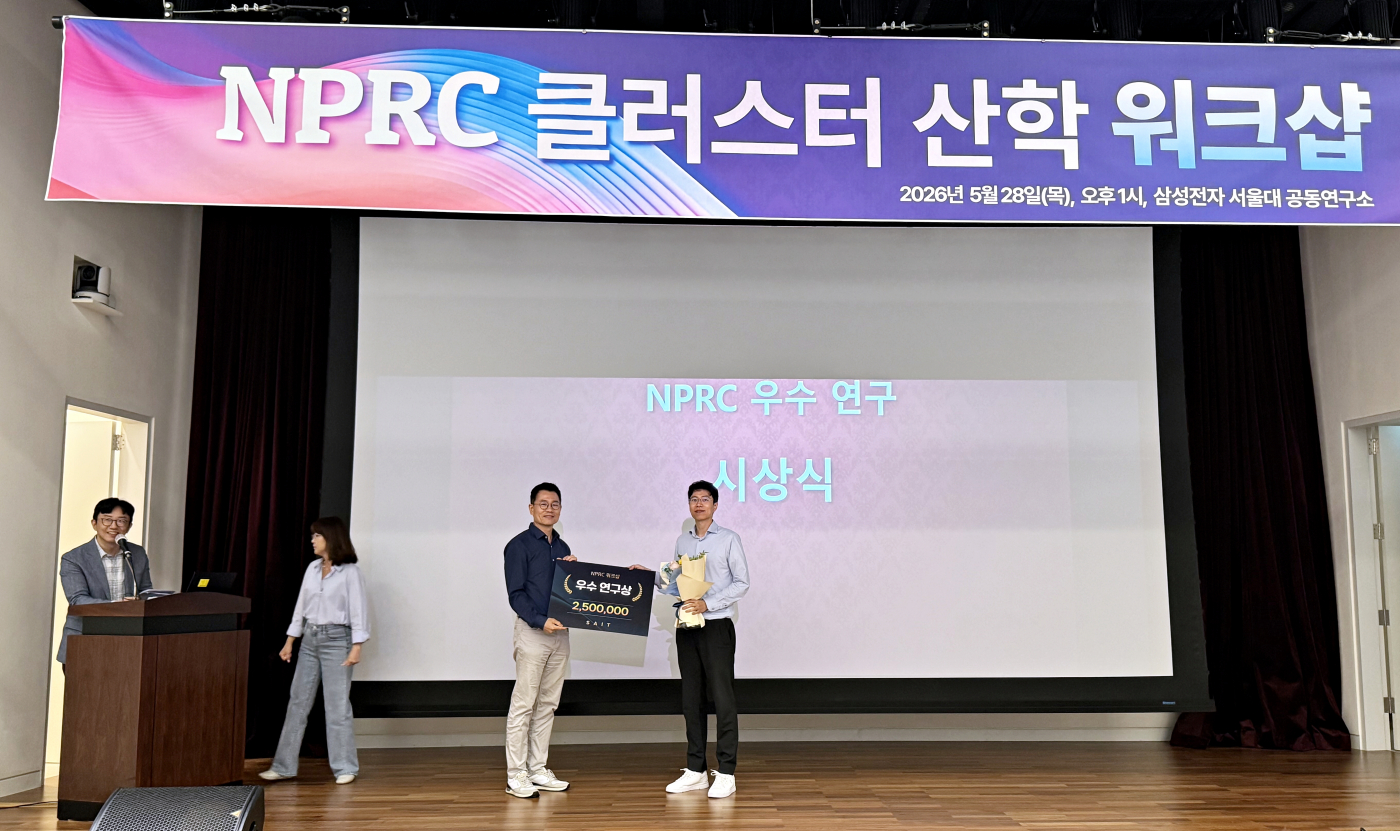
▲ Professor Hyun Oh Song (right), Department of Computer Science and Engineering, Seoul National University, receiving the Outstanding Research Award at the Samsung AI Center NPRC Workshop
[Reference Materials]
- Paper 1 (ICML 2026)
- Title: Rule2DRC: Benchmarking LLM Agents for DRC Script Synthesis with Execution-Guided Test Generation
- Authurs: Jinuk Kim, Junsoo Byun, Donghwi Hwang, Seong-Jin Park, Hyun Oh Song
- https://arxiv.org/abs/2605.15669
- Paper 2 (ICML 2026)
- Title: Identifiable Token Correspondence for World Models
- Authurs: Youngin Kim*, Ray Sun*, Inho Kim, Bumsoo Park, Hyun Oh Song (*co-first authors)
- https://arxiv.org/abs/2605.16457
[Contact Information]
Professor Hyun Oh Song, Department of Computer Science and Engineering, Seoul National University / +82-2-880-7272 / hyunoh@snu.ac.kr