loaction
- About
-
Academics
-
Undergraduate Programs
- Civil, Urban and Environmental Engineering
- Architecture and Architectural Engineering
- Mechanical Engineering
- Industrial Engineering
- Energy Resources Engineering
- Nuclear Engineering
- Materials Science and Engineering
- Electrical and Computer Engineering
- Naval Architecture and Ocean Engineering
- Computer Science and Engineering
- Aerospace Engineering
- Chemical and Biological Engineering
-
Graduate Programs
- Civil, Urban and Environmental Engineering
- Architecture and Architectural Engineering
- Mechanical Engineering
- Industrial Engineering
- Energy Systems Engineering
- Materials Science and Engineering
- Electrical and Computer Engineering
- Naval Architecture and Ocean Engineering
- Computer Science and Engineering
- Aerospace Engineering
- Chemical and Biological Engineering
- Interdisciplinary Program in Technology, Management, Economics and Policy
- Interdisciplinary Program in Urban Design
- Interdisciplinary Program in Bioengineering
- Interdisciplinary Program in Artificial Intelligence
- Interdisciplinary Program in Intelligent Space and Aerospace Systems
- Chemical Convergence for Energy and Environment Major
- Multiscale Mechanics Design Major
- Hybrid Materials Major
- Double Major Program
- Open Programs
-
Undergraduate Programs
- Research
- Prospective Students
- Campus Life
- International Office
- Communication
Research Achievements
SNU Researchers Develop “Ouroboros,” an AI System that Tracks Object Motion to Accelerate Video Analysis
-
Uploaded by
대외협력실
-
Upload Date
Jul 14, 2026
-
Views
720
SNU Researchers Develop “Ouroboros,” an AI System that Tracks Object Motion to Accelerate Video Analysis
- Achieves 2.61× faster video AI inference with 18.0% computation on edge devices
- Expected to accelerate real-time video AI commercialization in physical AI and augmented reality
- Presented at ACM MobiSys, a top-tier international conference in mobile systems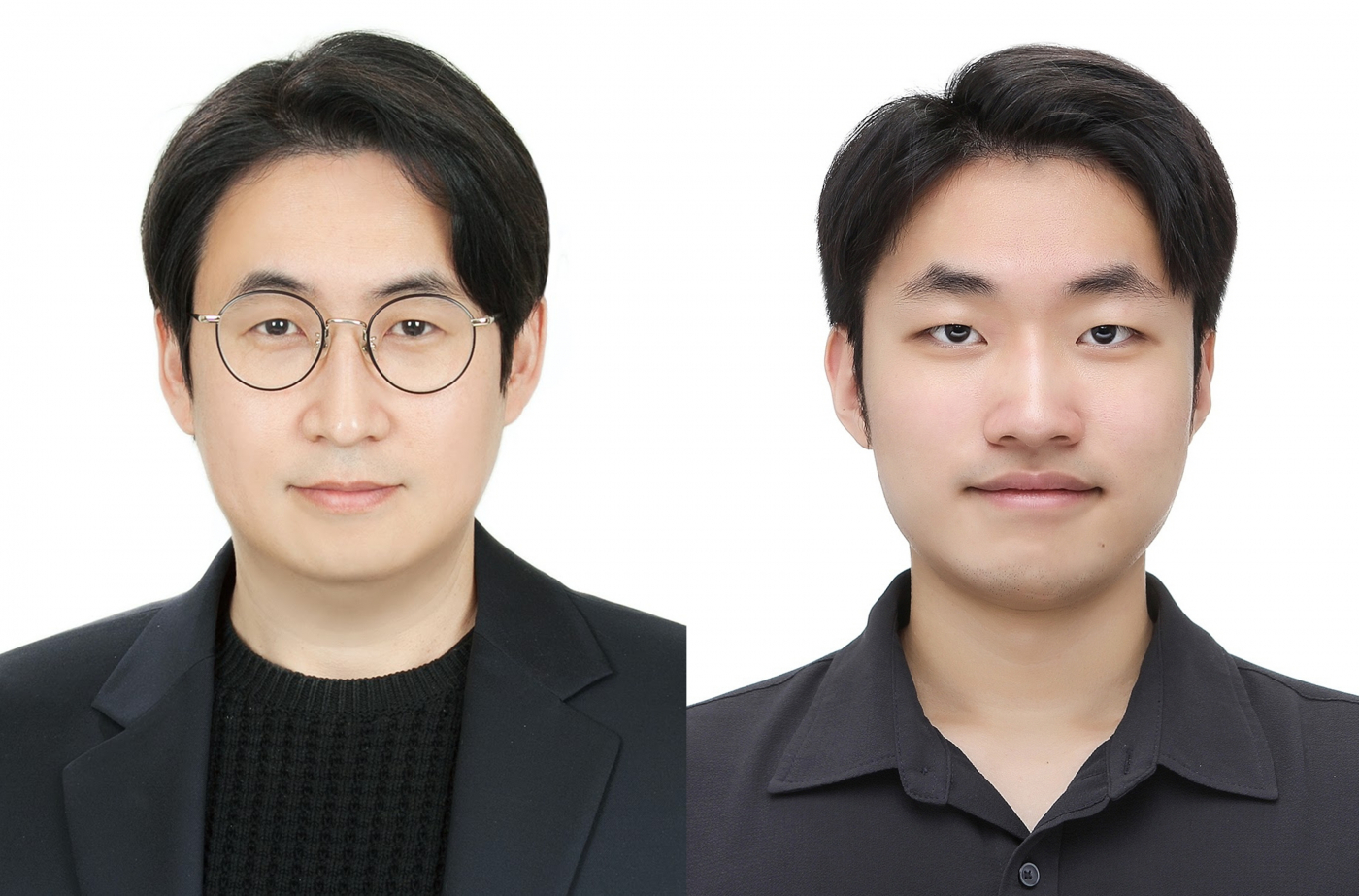
▲ Kyunghan Lee (left), Professor, Department of Electrical and Computer Engineering, Seoul National University; Chanjeong Park (right), Researcher, Department of Electrical and Computer Engineering, Seoul National University
Seoul National University College of Engineering announced that a research team led by Professor Kyunghan Lee of the Department of Electrical and Computer Engineering has developed an artificial intelligence system, “Ouroboros,” that performs Vision Transformer-based video analysis 2.61 times faster with 13.0% computation than conventional methods on edge devices.
The system is an innovative technology that reduces redundant computations in Vision Transformers by reusing visual information that repeatedly appears across consecutive video frames instead of recalculating it. In particular, it tracks objects and backgrounds even as they move within a video, identifies identical visual information, and selectively computes only regions with significant changes.
The team demonstrated that Ouroboros can significantly reduce computation, latency, and energy consumption while preserving the accuracy of high-performance video AI models. Ouroboros is therefore expected to play a decisive role in accelerating the commercialization of real-time video AI in fields such as physical AI and augmented reality (AR), where power and computational resources are limited.
The study was presented as an oral presentation on June 23 at ACM MobiSys 2026, one of the world’s leading conferences in mobile systems, held over three days starting June 22 in Cambridge, UK.
Recently, Vision Transformers* have demonstrated high performance across various visual AI applications, including object detection, image segmentation, and autonomous driving perception. However, due to their structural nature—dividing input images into multiple patches and computing relationships among all patches—they require large computational and memory resources. As a result, they are difficult to deploy in real time on edge devices* such as smartphones, robots, and drones, where computational resources and power are limited.
* Vision Transformer: A visual AI model that divides images into small patches and analyzes relationships between them to recognize objects and scenes
* Edge device: A device that runs AI models locally rather than on a remote server
Meanwhile, videos consist of sequential frames, and adjacent frames share highly similar features. Objects such as vehicles or pedestrians on a road often appear in consecutive frames with slight positional changes. Therefore, if previously computed information can be reused, redundant computations can be significantly reduced.
Various lightweight video AI techniques have been proposed to reuse redundant information across frames. However, these methods typically determine redundancy based on pixel positions or frame differences. As a result, when the camera shakes or objects move, regions that are actually identical still need to be recalculated, limiting their effectiveness.
To address these limitations, Professor Kyunghan Lee’s team proposed a new video AI system, Ouroboros, which reduces redundant computations by incorporating motion information of objects and backgrounds within videos.
Ouroboros leverages motion vectors provided by hardware video encoders to identify identical visual information shared across consecutive frames. This enables the system to recognize the same object or background even when it changes position within the frame and reuse computation results from previous frames.
To address the issue of information loss when objects move beyond the edges of the screen, the researchers introduced a toroidal input space that treats the left–right and top–bottom boundaries as seamlessly connected. Combined with a technique that repositions object location information according to their new positions, this approach enables objects that cross frame boundaries to be accurately recognized as continuous entities.
In addition, instead of recomputing the entire frame, the system selectively recalculates only regions with significant changes while reusing previous results for the rest. The team also designed a computation structure that minimizes memory access costs, ensuring that reductions in computation directly translate into improved processing speed and energy efficiency.
Experimental results showed that Ouroboros achieved up to an 87.0% reduction in computational load, a 2.61× reduction in inference speed, and a 64.5% reduction in energy consumption on NVIDIA Jetson Orin edge devices. In object detection and instance segmentation* tasks, it maintained accuracy loss below 1%. Even in scenarios where video data is transmitted to a server for processing, Ouroboros achieved higher accuracy with reduced network bandwidth compared to existing methods.
* Instance segmentation: An advanced computer vision task that not only detects objects but also identifies their exact boundaries at the pixel level
Ouroboros is not a newly designed Vision Transformer model itself, but rather a system-level technology that reduces redundant computations during the processing of sequential video. As such, it can be easily applied to a wide range of existing Vision Transformer-based video AI models. Furthermore, its applicability can be extended to larger-scale video AI models and hybrid systems where edge devices and servers collaborate in computation.
The technology is expected to serve as a key enabler for running high-performance video AI efficiently on edge devices with limited power and computational resources. It is therefore anticipated to be widely used in applications requiring real-time video analysis, such as autonomous driving, intelligent CCTV, drones, robotics, mobile AR, and smart factories.
Moreover, by transmitting only the information necessary for AI inference instead of entire video streams, the system can significantly reduce network usage. This is expected to contribute to stable and accurate video analysis services even under limited network bandwidth conditions. The benefits are expected to be even greater in largely static environments, such as CCTV surveillance, or in scenarios where robots exhibit relatively simple motion patterns.
Professor Kyunghan Lee, who led the study, stated, “This research is significant in that it secures a core technology capable of simultaneously addressing both computational and network bottlenecks, which have been major obstacles to implementing physical AI systems, including humanoid systems. We plan to actively pursue commercialization of Ouroboros in collaboration with physical AI and AI semiconductor companies.”
Based on this research, Professor Lee’s team plans to extend their work beyond video to accelerate edge–cloud collaborative inference for single-image inputs as well.
The first author of the study, Chanjeong Park, is currently a Ph.D. candidate in the Department of Electrical and Computer Engineering at Seoul National University. He continues to conduct research on systems that enable efficient high-performance AI inference through collaboration between edge devices and cloud computing. After completing his degree, he plans to pursue postdoctoral research, further advancing system technologies that allow large-scale AI models to operate in real time under constrained computational and communication environments.
This research was conducted as a joint project between Seoul National University and Carnegie Mellon University. It was supported by the Institute of Information & Communications Technology Planning & Evaluation (IITP) and the National Research Foundation of Korea (NRF), funded by the Ministry of Science and ICT, as well as by the Institute of Engineering Research and the the Institute of New Media and Communications (INMC) at SNU.
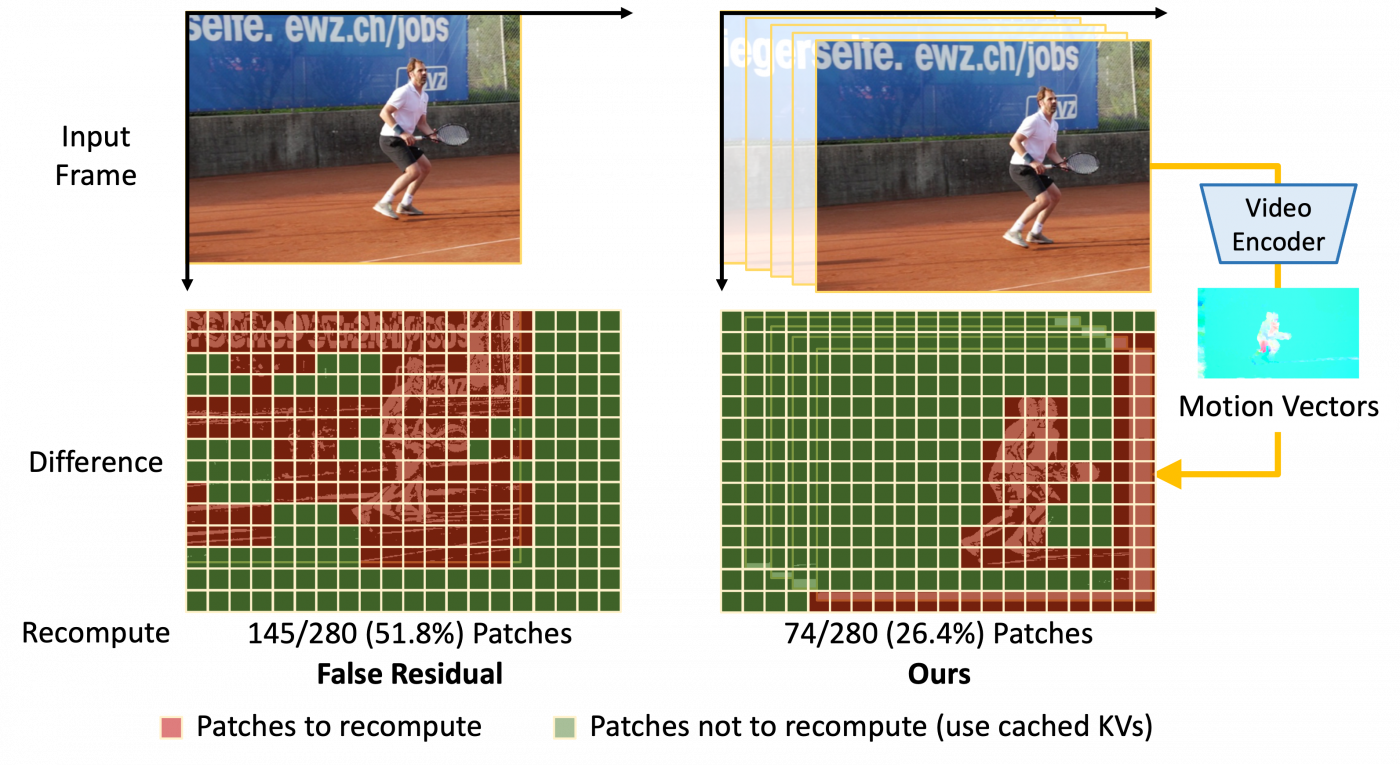
▲ Figure 1. Operating principle of Ouroboros.
Conventional methods (left) detect visual changes caused by object and background motion and recompute patches accordingly, whereas Ouroboros (right) uses motion vectors from a video encoder to track identical visual information and selectively recompute only regions where actual changes occur.
Red indicates recomputed patches, while green indicates reused patches.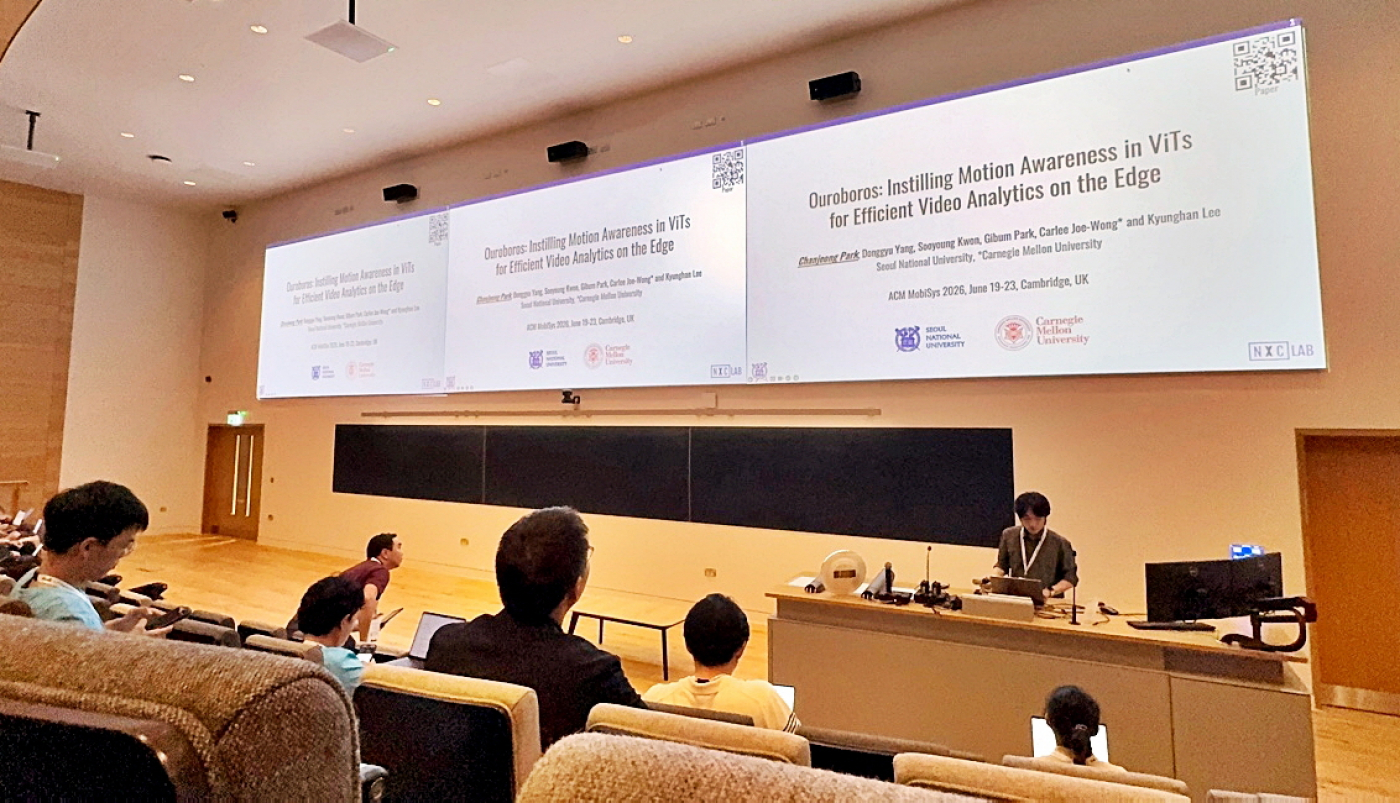
▲ Chanjeong Park, researcher in the Department of Electrical and Computer Engineering at Seoul National University, presenting the research at ACM MobiSys 2026 held in Cambridge, UK in June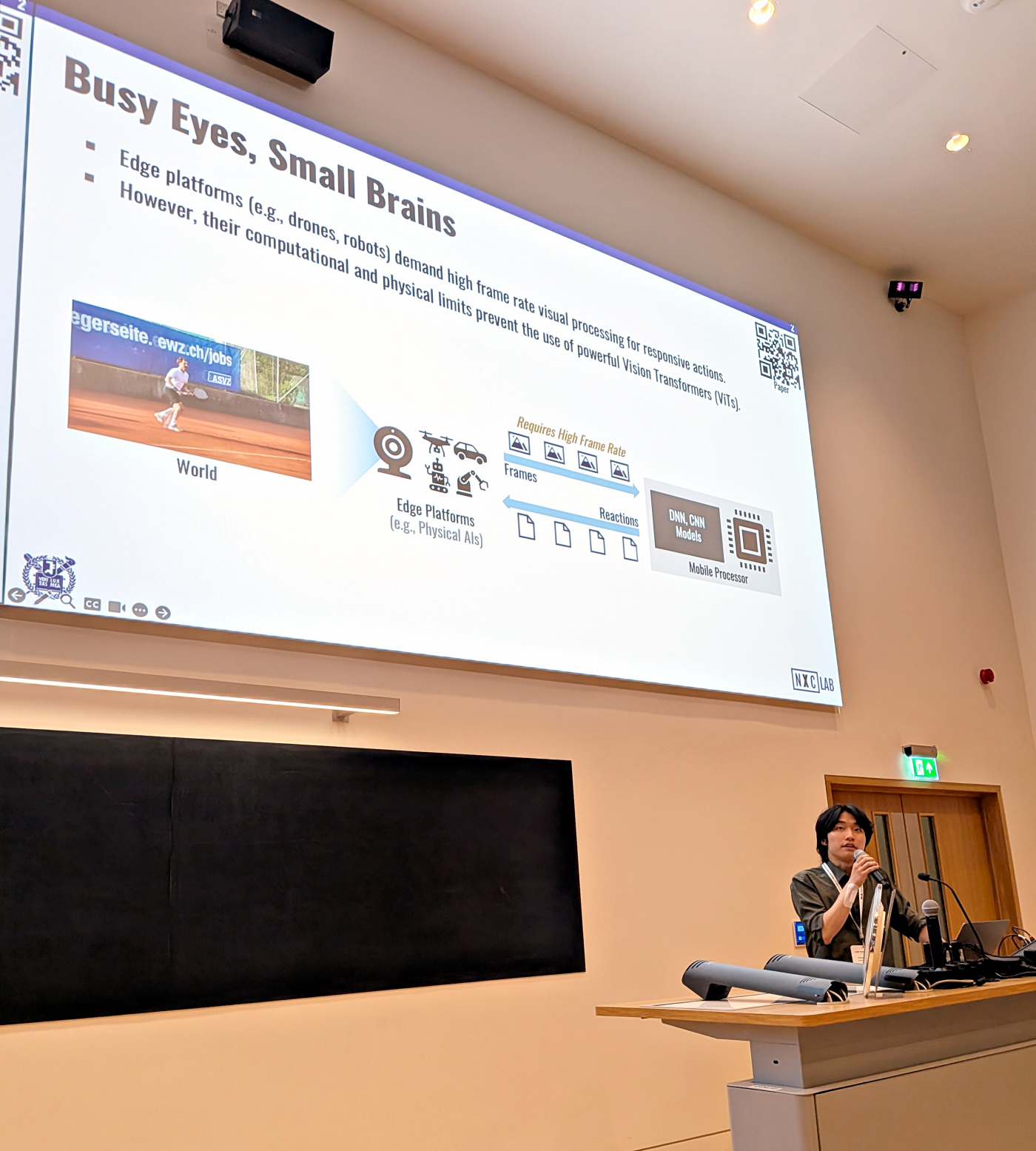
▲ Chanjeong Park, researcher in the Department of Electrical and Computer Engineering at Seoul National University, presenting the research at ACM MobiSys 2026 held in Cambridge, UK in June
[Contact Information]
- Kyunghan Lee, Department of Electrical and Computer Engineering, Seoul National University / kyunghanlee@snu.ac.kr
- Chanjeong Park, Department of Electrical and Computer Engineering, Seoul National University / cjpark99@snu.ac.kr